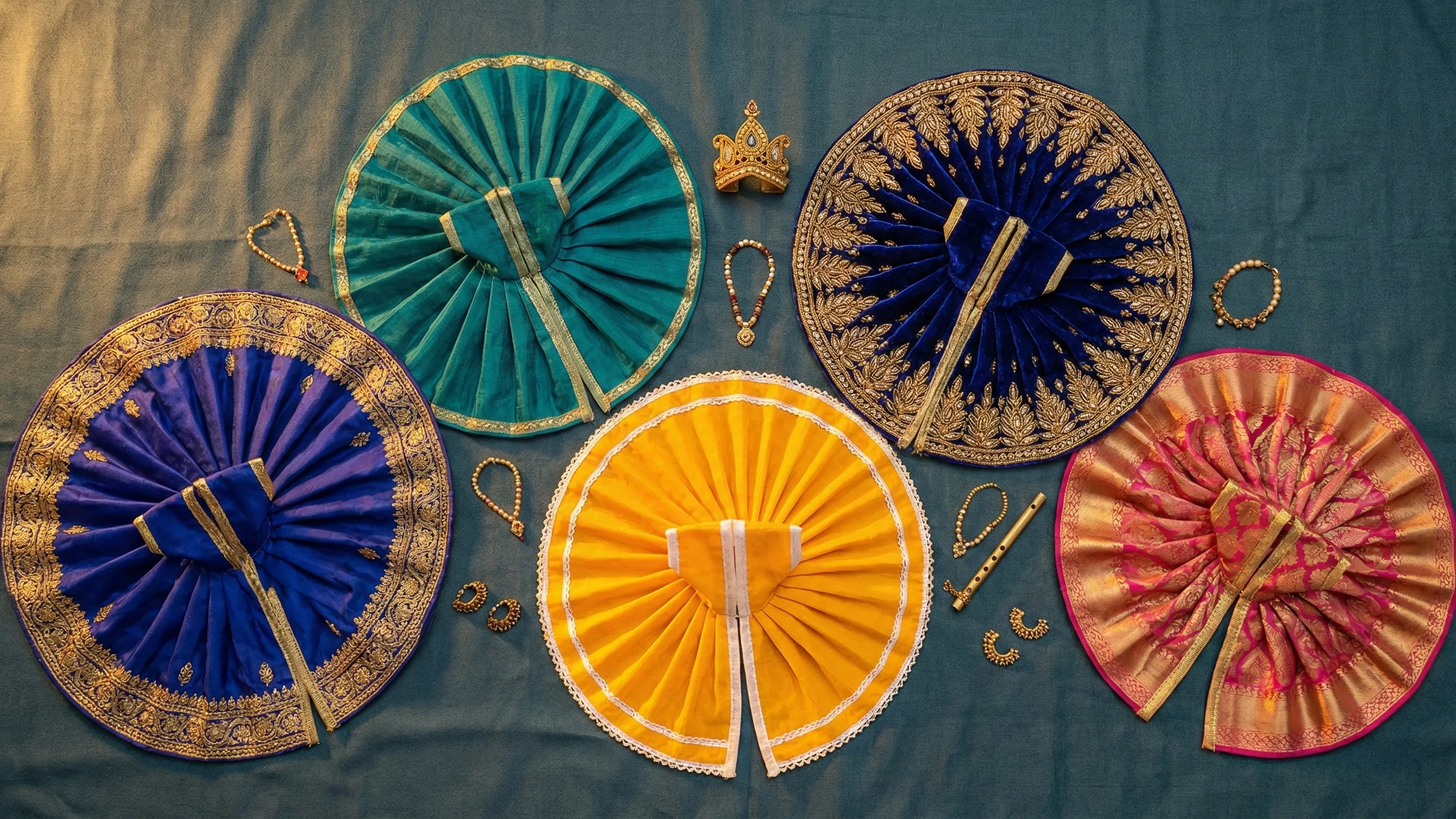
The day your Laddu Gopal comes home is unlike any other. You set up the mandir (home shrine), offer your first aarti (lamp offering), and then stand before your Thakurji with a quiet, unfamiliar question forming in your mind — what does he wear tomorrow? For most new devotees, the world of poshak (ritual dress for the idol) opens up all at once: dozens of fabrics, hundreds of designs, embroidery in silk thread and gold, seasonal styles and festival collections, size charts and custom orders. It is genuinely overwhelming, and it can steal some of the simple joy you felt in those first few moments. The truth is, you do not need a large or expensive collection to begin your seva well. You need three fabrics, chosen in a gentle sequence, and a willingness to let your understanding of each one deepen over time. This guide is my attempt to give you that sequence — learned not from a textbook, but from years of watching devoted hands dress their Kanha Ji with whatever they had and whatever they could offer.
Begin With Cotton: The Foundation of Every Collection
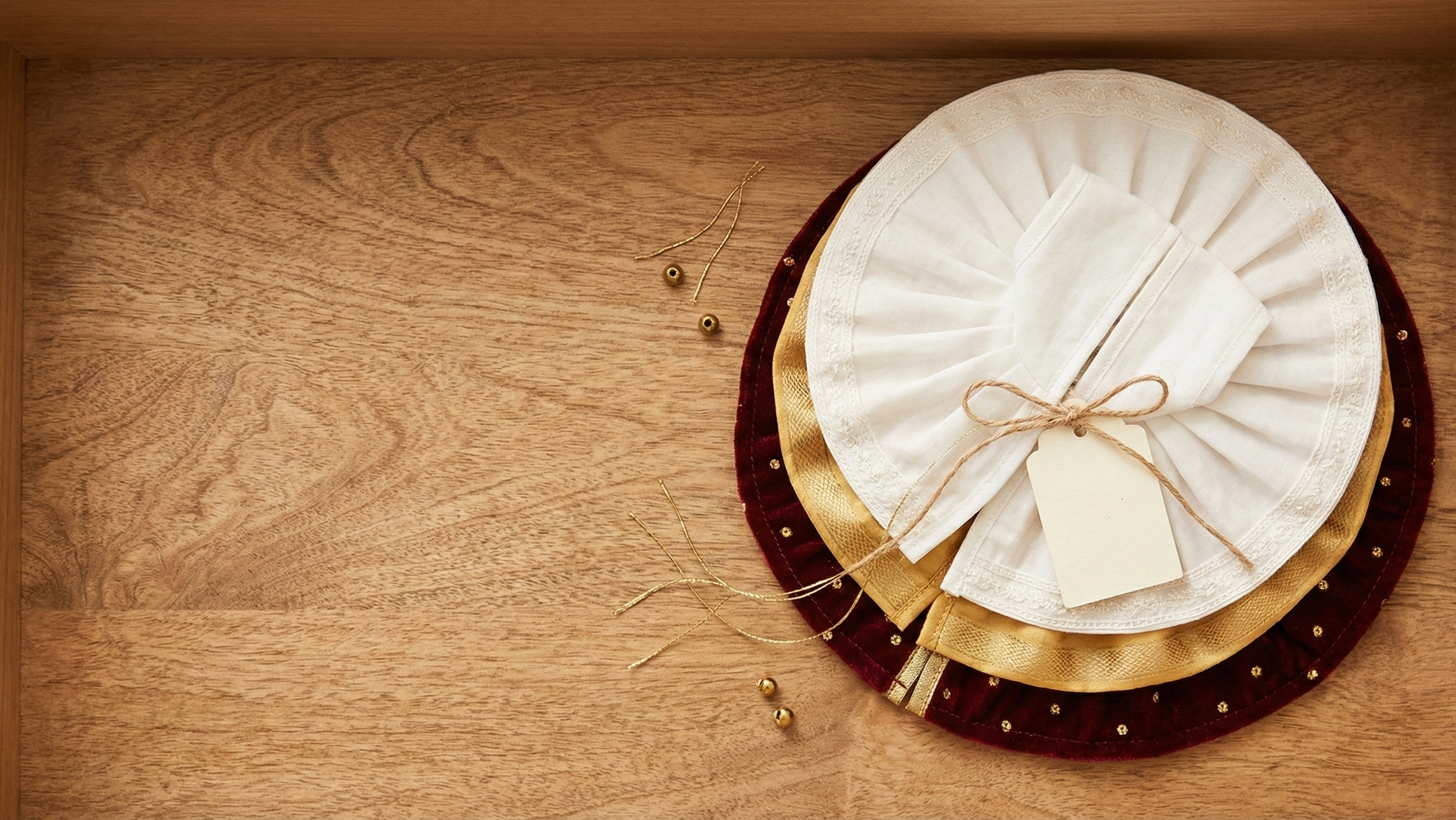
Cotton is where every honest poshak collection begins, and there is very good reason for that. When you are new to dressing Laddu Gopal, you are still learning how the fabric should sit against the idol's form, how to secure the poshak neatly at the back, and how to handle the tiny accessories without fumbling. Cotton is the most forgiving teacher you will find. It is soft enough that it will not scratch a delicate painted or marble murti, light enough that it drapes easily even for a beginner, and practical enough to be washed at home after Holi or any occasion where colour, oil or food offering touches the garment. Cotton poshak are also the most budget-friendly option, which matters when you are in the early stage of building a collection and are not yet sure which sizes, styles and colours best suit your particular idol. Two or three cotton poshak in rotation form the quiet, reliable backbone of your Thakurji's daily shringar (devotional adornment) — simple, clean, and offered with full heart.
- Machine-washable at home on a gentle cycle with mild detergent — no dry-cleaning cost or worry
- Breathable and gentle on the idol surface, especially important for painted or lacquered finishes
- Wide range of prints available: block prints, bandhani (tie-dye), floral, and solid colours
- Most affordable fabric, allowing you to build a rotation of two to three pieces without a large outlay
- Forgiving to work with — easy to adjust and re-drape as you learn your Kanha Ji's proportions
Tip: For your very first cotton poshak, choose a medium-weight fabric rather than the thinnest available. A little body in the cloth helps it hold its shape on the idol and looks neater even if the drape is not yet perfect.
The Second Investment: Silk for Auspicious Occasions
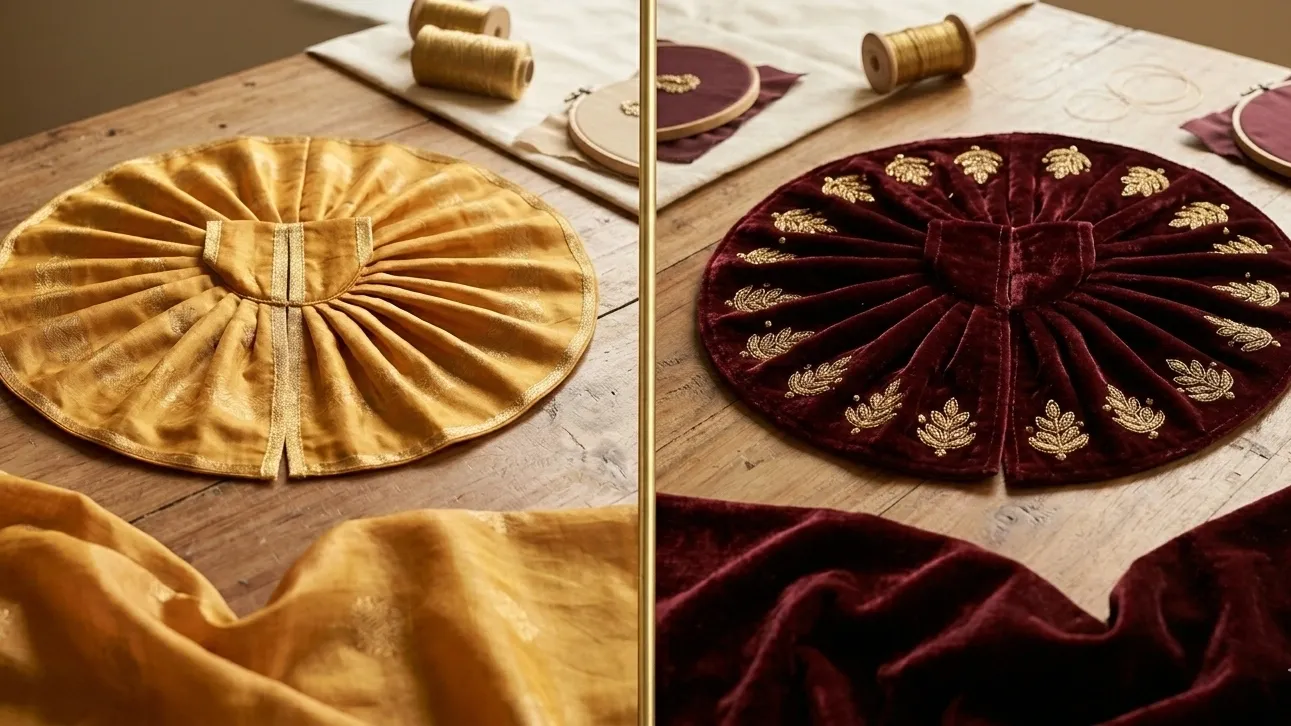
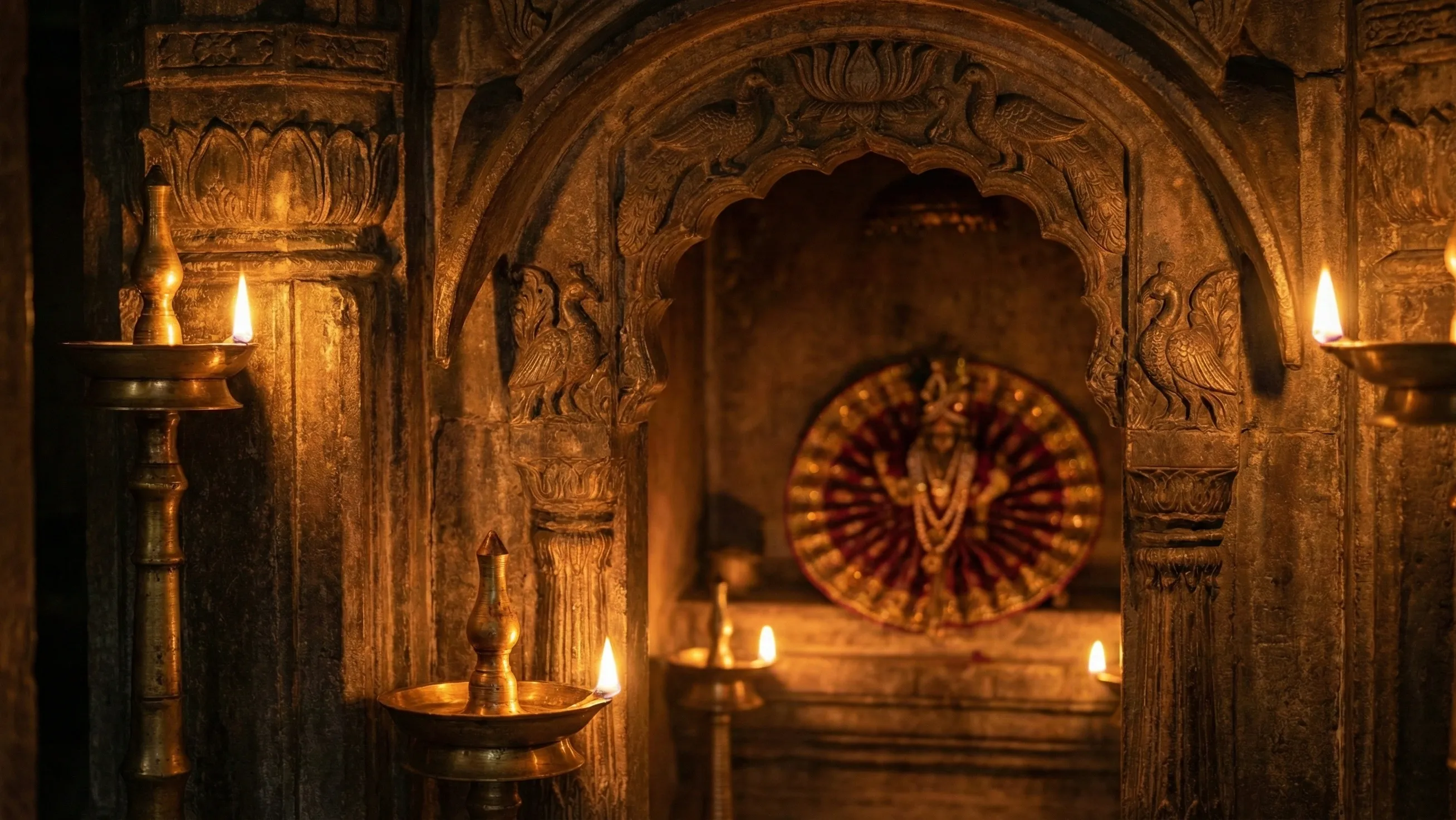
Once you have a few cotton poshak and feel comfortable with the daily rhythm of seva, silk becomes your natural next step — and for many devotees, it becomes their most treasured fabric. Silk holds a uniquely sacred place in the tradition of Laddu Gopal shringar. Ancient temple practice consistently elevated silk above other fabrics for deity worship, and the reason is both practical and spiritual. Pure silk has a natural lustre that reflects lamp light in a warm, living way that no synthetic fabric can replicate. When you light the aarti flame and your Thakurji is dressed in silk, there is a quality to the light on the fabric that feels genuinely devotional. Beyond its visual beauty, silk is also temperature-regulating in a way that makes it suitable across most of the year — it keeps Kanha Ji cool through the summer months while providing a gentle warmth in the milder seasons. Banarasi silk, woven in Varanasi with traditional zari (metallic woven thread) borders, is the natural choice for Janmashtami and Annakut. For the rest of the year, a plain or lightly bordered pure silk in deep blue, saffron, or ivory serves as the poshak you reach for on any day that feels a little more sacred than usual.
- Natural lustre that responds beautifully to diya and lamp light during aarti
- Temperature-regulating properties make it appropriate from early spring through the monsoon
- Holds dye colours with depth and richness — jewel tones look their finest in pure silk
- Banarasi silk with zari borders is the most auspicious choice for Janmashtami and major festivals
- Drapes with an elegant weight that frames the idol's form more gracefully than lighter fabrics
The Third Addition: Velvet for Winter's Deep Warmth
As the months cool in November and the days grow short, velvet takes its rightful place in your Thakurji's wardrobe. No other fabric captures the spirit of winter seva quite like it. Velvet's dense, plush pile creates an almost tactile warmth, and because it absorbs light differently from silk or cotton, the colours in velvet have a richness and a depth that is unlike anything else. A maroon or deep emerald velvet poshak under the soft glow of a ghee diya during Diwali or Govardhan Puja is one of those sights that stays with a devotee long after the festival ends. Velvet is also the best base for heavy embellishments — zardozi (needle embroidery with metallic thread and stones) sits beautifully on the plush pile, which holds the weight of intricate work without puckering or shifting. This means that when the occasion calls for Kanha Ji's most opulent look, velvet is almost always the foundation beneath it. One or two velvet poshak for the winter months, in the deep jewel tones that suit the season, is all you need to begin with.
- Maroon, navy, emerald, and royal purple show their deepest saturation on velvet
- Dense pile provides natural warmth — well-suited to December and January seva
- Best fabric base for zardozi embroidery, mirror work, and stone setting
- Creates extraordinary visual depth under candlelight and ghee diya glow
- Structured drape means the poshak holds its shape beautifully on the idol
Tip: Store velvet poshak flat or loosely rolled — never folded. A fold left in velvet becomes a permanent crush mark. Use a breathable muslin cloth to wrap it and keep it away from moisture during the off-season.
Fabrics You Will Discover Later
Beyond cotton, silk, and velvet lies a world of textiles that devotees discover gradually as their collection matures and their understanding of seva deepens. Brocade (heavy woven fabric with raised metallic patterns, traditionally from Varanasi) has a sculptural quality that makes it exceptional for grand ceremonies and annual puja events. Chanderi, a traditional handwoven fabric from Madhya Pradesh, has a sheer, ethereal quality with subtle gold bootas (woven motifs) that creates an otherworldly effect — as if the fabric itself is barely there, just a suggestion of fabric floating around Kanha Ji's form. Georgette, lightweight and slightly crinkled, takes printed designs beautifully and is a natural choice for bandhani and leheriya poshak in the summer and monsoon months. Zari-work poshak — where the metallic thread is the primary design element rather than an accent — are among the grandest pieces any collection can hold, and they are properly discovered only once you know your Thakurji's proportions well and have an occasion magnificent enough to call for them. None of these fabrics need to be rushed into. They will arrive in your collection in their own time, as your seva grows.
- Brocade: heavy and structural, best for grand ceremonies and annual puja occasions
- Chanderi: sheer handwoven fabric with gold bootas, ethereal for summer and Jhulan Yatra
- Georgette: lightweight with a crinkled texture, ideal for printed bandhani and leheriya poshak
- Zari work: metallic thread as the primary design element, reserved for the grandest occasions
- Satin: mirror-like sheen, beautiful for Sharad Purnima and evening aarti settings
Love Counts More Than Cost
Before I close this guide, I want to say the thing that often does not get said in articles about fabric and collections: the poshak that matters most to your Laddu Gopal is the one offered with a full and attentive heart. I have seen the most exquisite brocade pieces offered with distraction and obligation, and I have seen a simple cotton poshak in faded blue pressed onto Kanha Ji with such devotion that the whole room felt different. Seva is not measured in thread count or embroidery weight. Begin wherever you are. If today you can only offer a small, plain cotton poshak — offer it with everything you have. The collection will build itself, slowly and naturally, as your relationship with your Thakurji deepens. At Gopalji Fashion, we make every piece with the understanding that it will be placed on a beloved deity by devoted hands — and that responsibility, whether the piece costs two hundred rupees or two thousand, is one we never take lightly.
Tip: If you are building your first collection on a modest budget, start with two cotton poshak for daily rotation and one silk piece for festivals. These three pieces will serve your Kanha Ji beautifully through an entire year of seva before you need to add anything else.
Tags