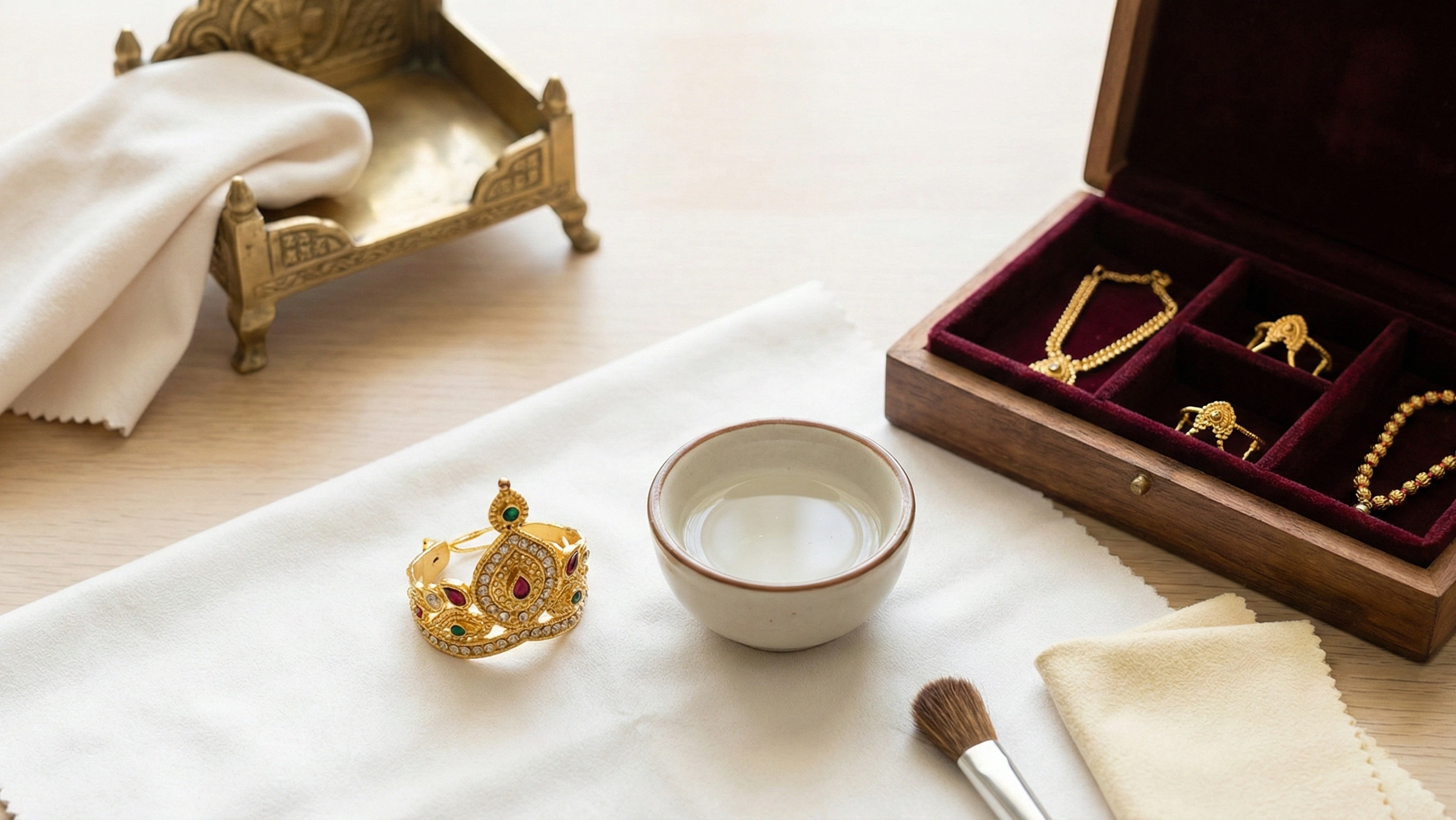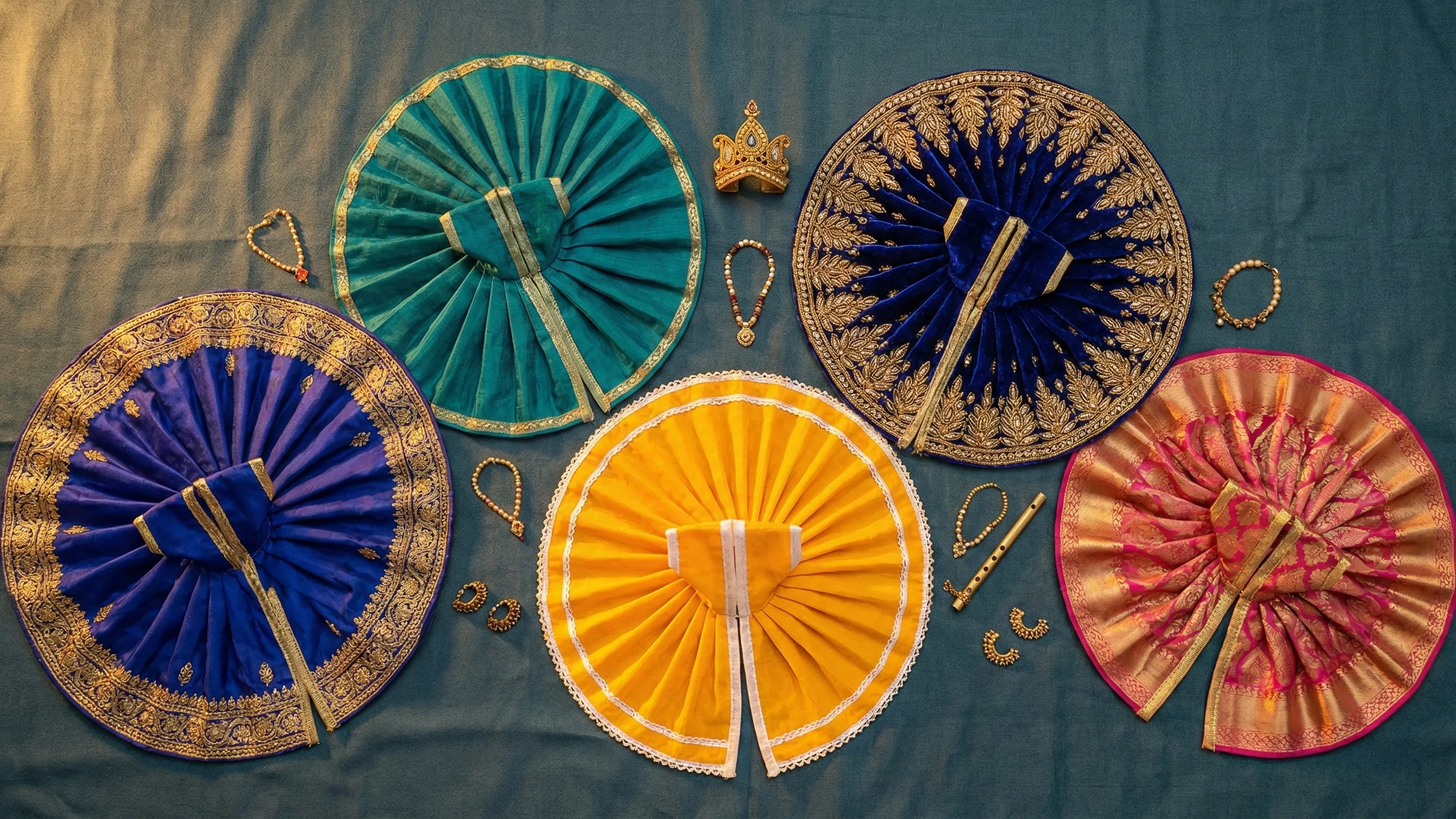
A poshak is not just clothing. It is sevaa (devoted service), offered stitch by stitch to our Laddu Gopal. When you invest in a beautiful silk or velvet poshak, you are investing in your Thakurji's dignity, and that investment deserves to be protected. Yet the most common reason poshak lose their beauty early is not poor quality. It is improper care. Incorrect washing strips colour and weakens threads. Careless storage invites insects and mildew. A little knowledge and a simple routine can keep your entire poshak collection looking fresh and vibrant for years, even decades. This guide covers everything: washing by fabric type, smart storage, seasonal maintenance, emergency stain handling and the mistakes most devotees only learn about the hard way.
Washing Rules by Fabric
Every fabric in your poshak collection has different needs, and treating them all the same is the fastest way to cause damage. The general rule is simple: the more delicate and embellished the fabric, the less water it should see. Here is what each fabric needs.
- Cotton: the most forgiving fabric. Hand-wash in lukewarm water with a mild detergent, or use a machine on a gentle, cool-water cycle. Air-dry in shade, never in direct sunlight, which causes colour to fade.
- Silk: always hand-wash in cold water using a silk-specific detergent or a few drops of mild baby shampoo. Never wring or twist silk. Press the water out gently by laying the poshak flat between two soft towels and pressing down lightly.
- Velvet: best left to dry cleaning. If dry cleaning is not accessible, use a soft damp cloth to spot-clean the surface only. Never fully submerge velvet in water, as the pile can mat permanently.
- Brocade and zari work: dry clean only. Water causes metallic zari threads to tarnish and stiffen. Even spot cleaning should be done with extreme care using just a barely damp cloth.
- Satin and georgette: gentle hand-wash in cool water works well. Use minimal detergent and rinse thoroughly. Satin is particularly prone to water spots if dried unevenly, so lay it flat on a towel to dry.
Tip: When in doubt, spot clean rather than fully wash. A small stain treated promptly causes far less damage than an entire poshak subjected to incorrect washing.
Storage That Protects
How you store your poshak between uses matters as much as how you wash them. The three enemies of stored poshak are moisture, insects and sunlight, and all three can be managed with a little care. Always make sure every piece is completely dry before folding it away, even if it means airing it for an extra day.
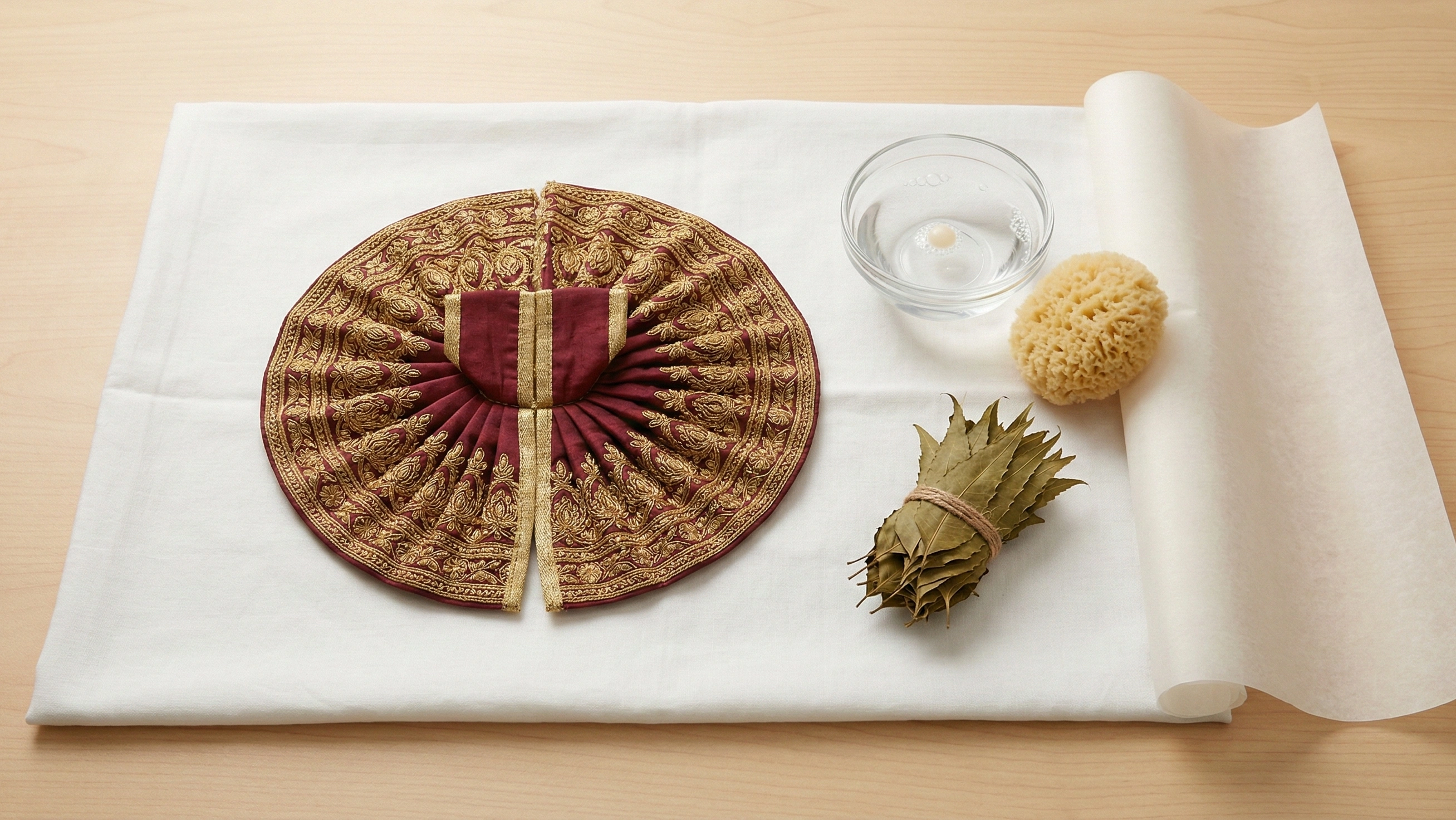
- Wrap silk and velvet pieces individually in soft muslin (mulmul) cloth or acid-free tissue paper. This protects the surface from friction and dust.
- Wrap brocade and heavy zari poshak in butter paper (the kind used in baking) before the outer muslin wrap. This prevents the metallic threads from tarnishing.
- Never store poshak in plastic bags or airtight containers. Plastic traps moisture and creates the perfect environment for mildew and odour.
- Store your collection in a cool, dry, dark drawer or box, away from windows. Direct sunlight fades even the richest colours over time.
- Place natural insect repellents in your storage area: a few dried neem leaves, small lavender sachets, or a piece of natural camphor (kapoor) wrapped loosely in cloth. Replace these every two to three months.
Seasonal Maintenance
Your poshak collection needs a little extra attention as the seasons change, particularly during the monsoon (barsat) and deep winter months. Monsoon humidity is the single biggest cause of mildew on stored poshak, and winter can leave fabrics stiff and musty if they are not aired. Building a simple seasonal habit into your seva routine takes only a few minutes but makes a significant difference.
- Monsoon care (June to September): take out your stored poshak and air them in a dry, ventilated room, not outdoors, at least once a month. Check for any signs of mildew (small grey or white spots) and address them immediately with spot cleaning. Consider placing a small silica gel packet in your storage box during these months.
- Post-monsoon airing (October): before the festival season begins, air your entire collection, check all embellishments for loose sequins or threads, and do any small repairs. This ensures Thakurji's wardrobe is in perfect condition for Diwali and the winter celebrations.
- Winter airing (December to January): velvet and heavy brocade pieces can become compressed and musty in storage. Hang them in a well-ventilated room for a few hours on a dry day to let the fabric breathe and the pile of velvet recover.
Tip: Set a reminder on your phone for the 1st of every month during monsoon season to air your poshak. It takes ten minutes and saves months of regret.
Emergency Stain Handling
During puja, stains happen. The most common culprits are kumkum (vermilion), haldi (turmeric), ghee and fresh flower colour. The golden rule with any stain on a poshak is to act within the first few minutes if you can, and to never rub the stain, which drives it deeper into the fibres. Always blot and lift.
- Kumkum (vermilion): blot up any excess immediately with a dry cloth. Then dab, do not rub, with a cloth moistened with cold water. For silk or velvet, take the poshak to a dry cleaner as soon as possible after this first step.
- Ghee (clarified butter): use a dry, clean cloth to absorb as much ghee as possible first. Then apply a tiny pinch of talcum powder or cornflour to the spot, leave it for ten minutes to absorb the remaining oil, and gently brush it away. Avoid water on fresh ghee stains, as water spreads the oil.
- Haldi (turmeric): one of the most stubborn stains. For cotton, cold water and gentle soap applied promptly can help. For silk, velvet or brocade, do not attempt to treat haldi at home. Take it directly to a dry cleaner and mention the stain type.
Common Mistakes to Avoid
In our years of making poshak at Gopalji Fashion, the care questions we receive most often come from devotees who have already made a mistake they wish they had known to avoid. These are the most common ones, shared here so you do not have to learn them the same way.
- Washing in hot water: hot water causes silk to lose its sheen, velvet to mat and colours to bleed. Always use cold or cool water.
- Wringing and twisting: this breaks the delicate weave of silk and satin and distorts the shape of the poshak permanently. Press, never wring.
- Drying in direct sunlight: UV light fades colour aggressively, especially on silk and deeply dyed cotton. Always dry in shade.
- Folding on metallic zari borders: repeated folding along the same line cracks and breaks zari threads. Roll zari and brocade poshak loosely rather than folding flat.
- Storing while even slightly damp: this is the single most common cause of mildew. Even a poshak that feels dry to the touch may have residual moisture. Air for at least 24 hours before storing.
- Using strong chemical sprays near stored poshak: air fresheners, insecticides and camphor tablets placed directly on fabric can leave permanent stains. Always wrap camphor and keep it from direct contact with any fabric.
Tip: When a poshak from Gopalji Fashion arrives, save the tissue wrap it comes in, as it is the perfect material to store that same piece for years.
Tags