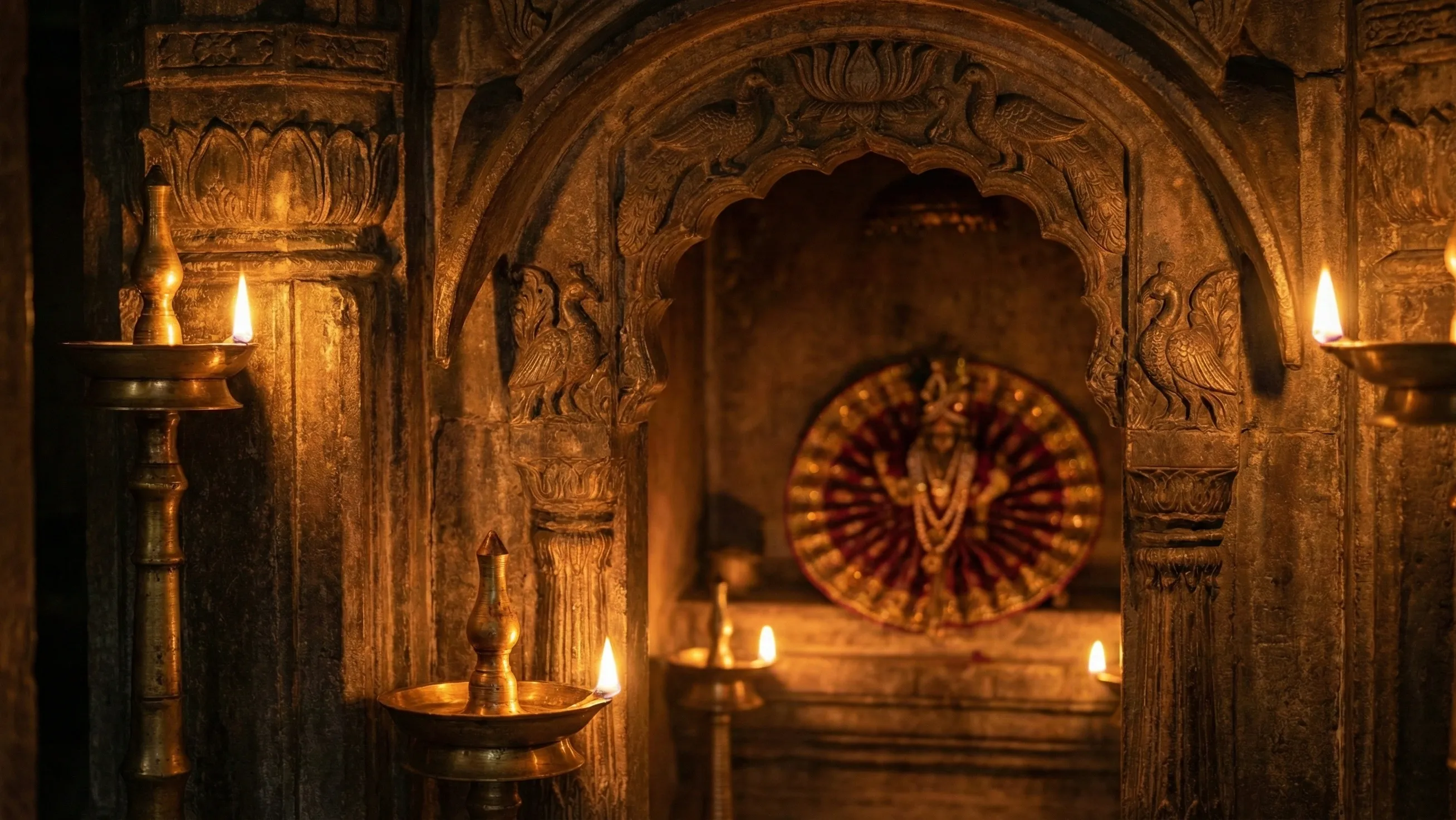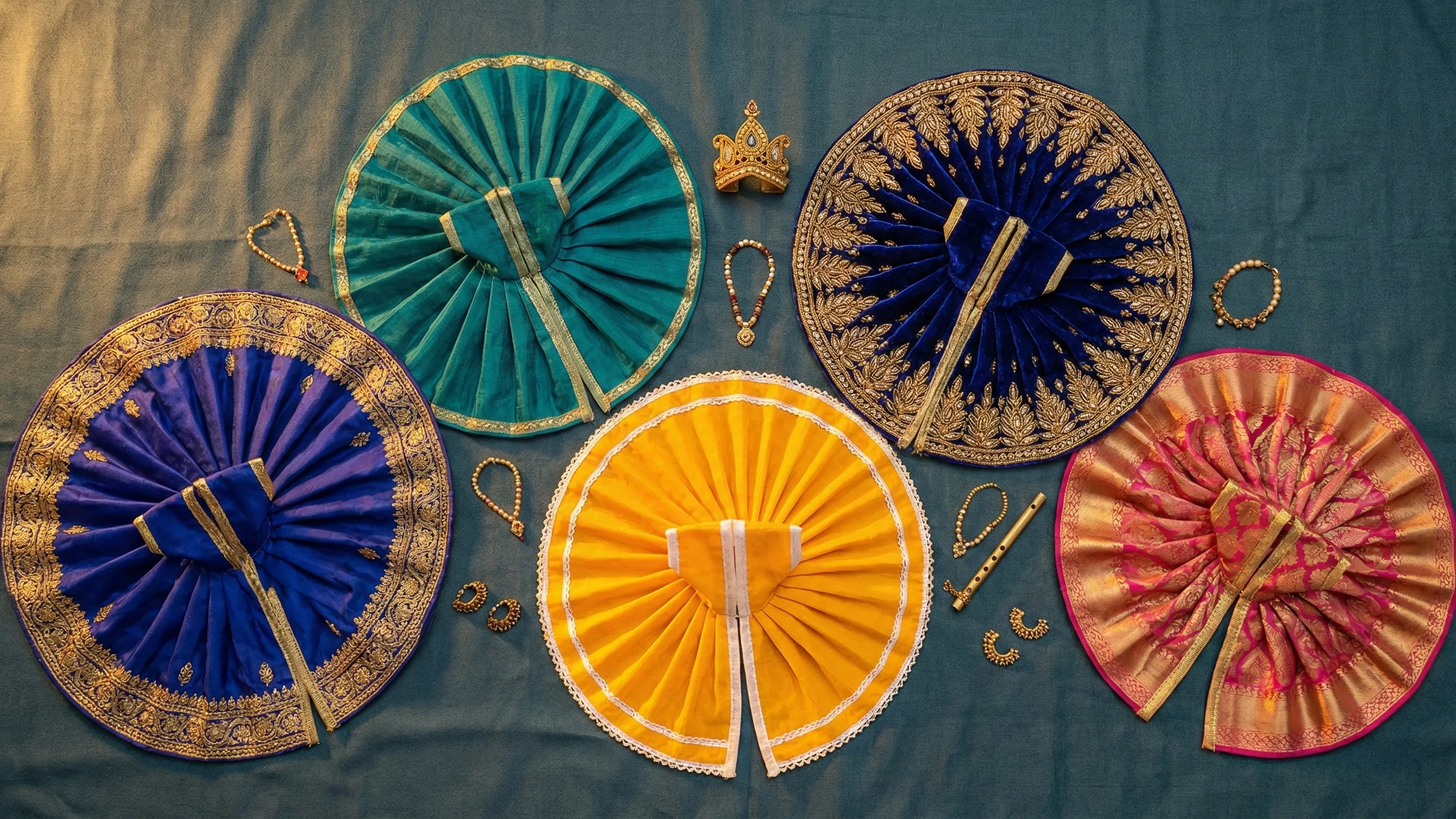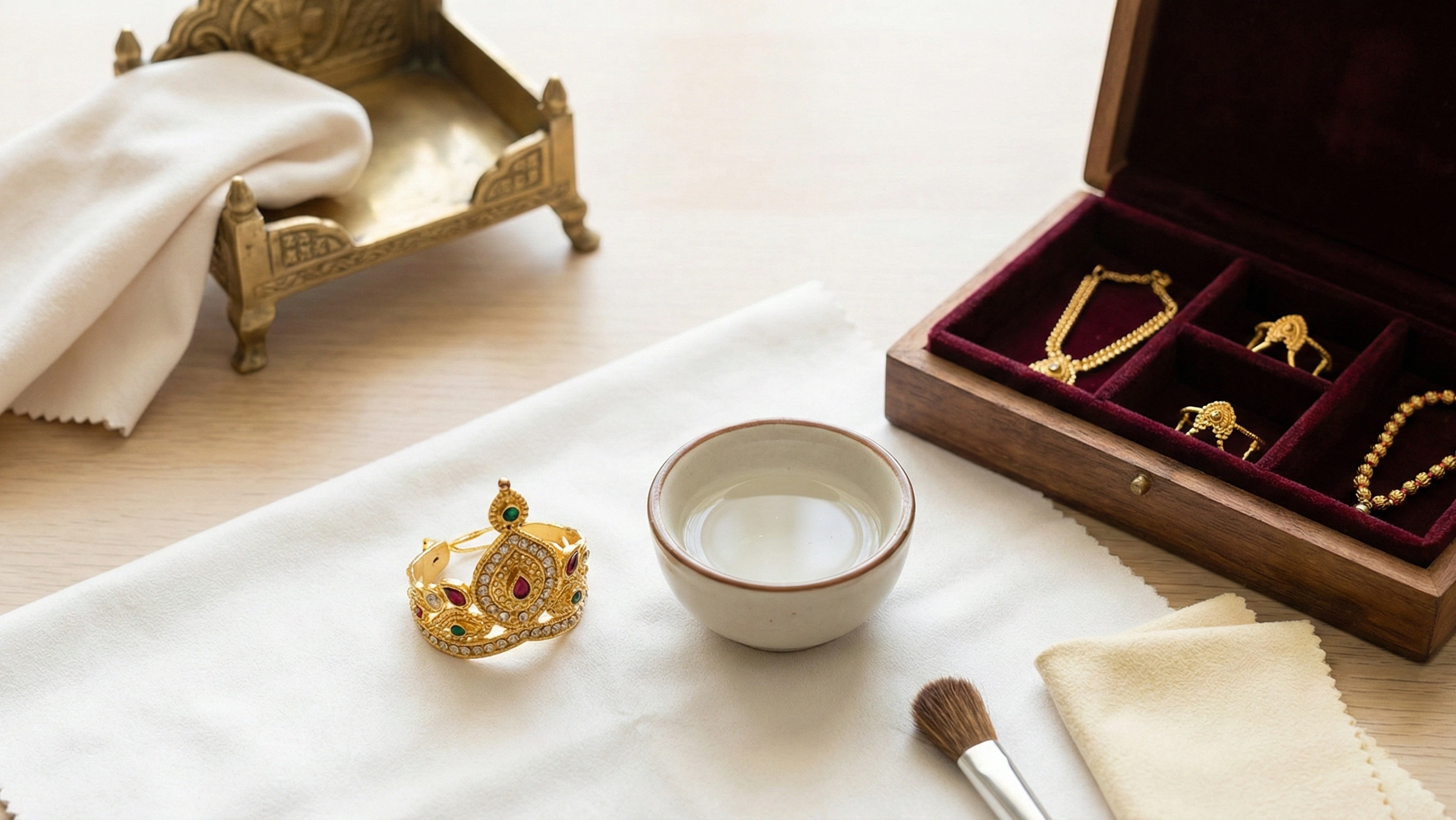
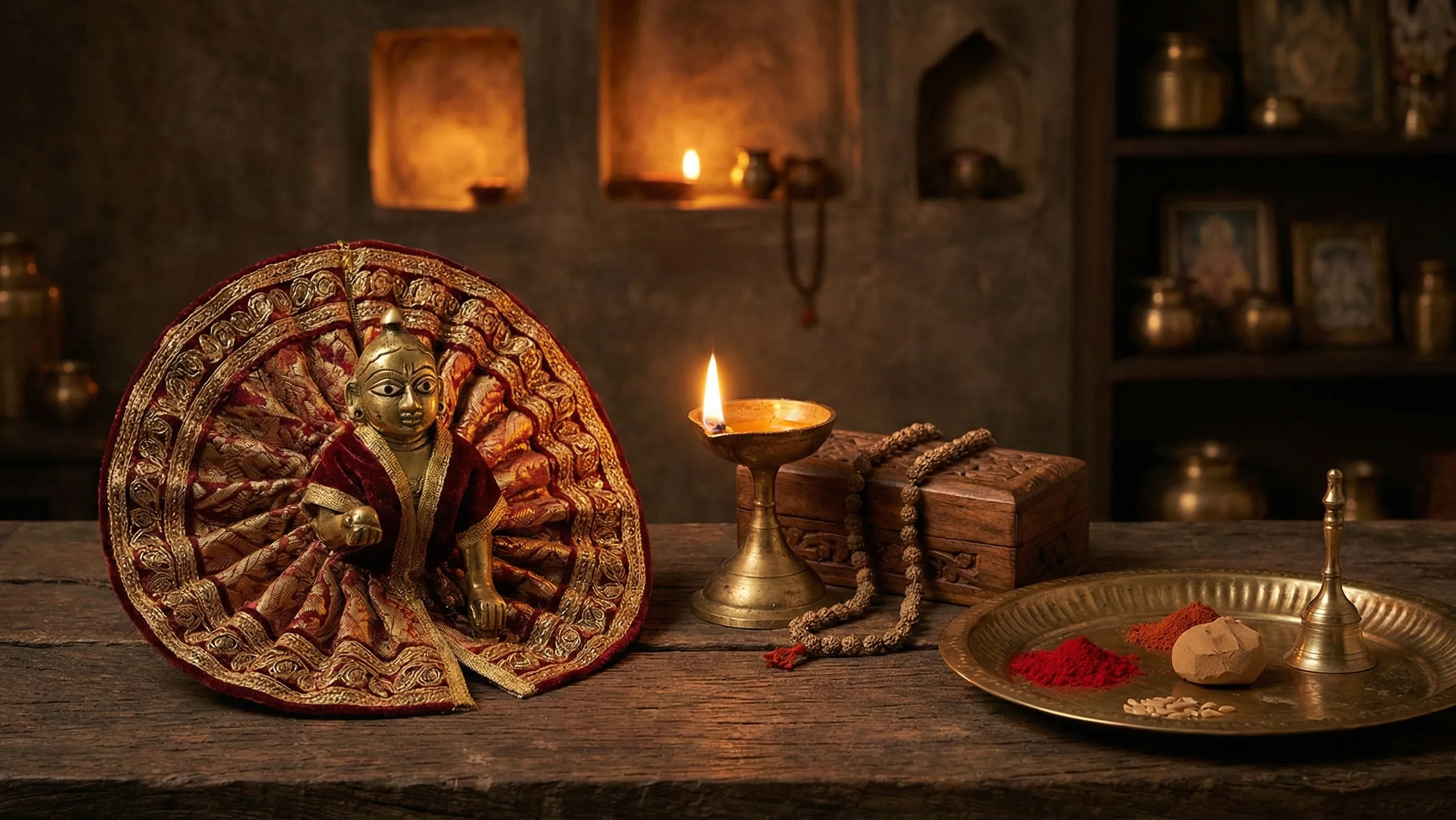
When we dress Laddu Gopal each morning — fastening the tiny mukut (crown), looping a pearl haar (garland) around the neck, placing the miniature bansuri (flute) in those small hands — we rarely stop to think about how old those gestures truly are. The act of adorning a deity with jewellery is not a modern devotional habit born of affection alone. It is rooted in thousands of years of temple theology, Sanskrit treatise, and living Vaishnava tradition that stretches from the great temples of Mathura and Vrindavan all the way into the puja rooms of ordinary Indian homes. What we do with a small idol and a handful of ornaments today is, in the most literal sense, a continuation of rites that were codified in ancient agama (sacred temple codes) and celebrated by generations of bhakta (devotees) long before us. Understanding where these traditions come from does not make the seva (service) more complicated — it makes every small act of shringar feel weightier, more meaningful, and more consciously offered.
The Mukut: More Than a Crown
Of all the ornaments placed on Thakurji, the mukut (crown) carries the densest layer of symbolic meaning. In Vaishnava iconography, the crown is the primary assertion of divine sovereignty — it signals that the one wearing it is not merely an exalted king but the ruler of all three worlds, the source of all creation. The Jagannath tradition at Puri maintains one of the oldest and most elaborate mukut traditions in India, with the deity wearing different crowns on different occasions, each with a distinct theological significance. The peacock feather tucked into Krishna's crown — the morpankh — is itself the subject of extensive devotional poetry, representing the inseparable bond between Krishna and nature, and between the devotee and the Lord. Over the centuries, the mukut worn by home idols evolved from simple lotus-shaped hammered gold leaf, as seen in very old village puja traditions, into the ornate filigree and stone-set crowns familiar today. Each evolutionary step reflects not changing taste alone, but the expanding theological imagination of Bhakti poets and temple artisans who found ever more elaborate ways to express the inexpressible majesty of Kanha Ji.
Tip: When selecting a mukut for your Laddu Gopal, look for one proportioned to your idol's head — a crown that tilts or falls covers the face during darshan. A well-fitted mukut sits slightly tilted to the right, as seen in classical temple iconography.
Pearl, Flute, and the Language of Sacred Ornament
Each individual ornament in the traditional Laddu Gopal shringar set speaks its own devotional language. The moti haar (pearl garland) is perhaps the most theologically rich of all accessories. The Sanskrit word for pearl — mukta — is the same root word used for mukti, meaning liberation or spiritual freedom. Wearing a pearl garland around the neck of the Lord was, for the ancient Sanskrit poets and temple scholars, a statement of enormous subtlety: the liberated soul adorns the one who liberates. The bansuri (flute) carries an equally profound theological identity. The great Bhakti philosopher Surdas, along with dozens of poets in the Braj Bhasha tradition, wrote extensively about the flute not as a musical instrument but as a symbol of the ideal devotee. The bansuri is hollow — empty of ego, empty of self-will — and it is precisely this emptiness that allows the divine breath to move through it and produce music. Placing the bansuri in Kanha Ji's hands is a quiet acknowledgement of what devotion asks of us: to hollow ourselves out, to stop insisting on our own tune, and to let the Lord play through us.
- Moti haar (pearl garland) — from mukta, the Sanskrit word for both pearl and liberation; the garland symbolises the liberated soul offering itself to the liberator
- Bansuri (flute) — hollow, empty of self; Bhakti poets read the flute as the model devotee who empties the ego so divine breath can move through
- Kangan (bangles) — representing playfulness and the natkhat (mischievous) childhood of Kanha Ji; often the first ornament gifted to a new idol by the devotee
- Haar (necklace/garland of flowers or beads) — linked in temple manuals to the offering of the heart; choosing fragrant flowers deepens the act of offering
Tip: When placing the bansuri in your Thakurji's hands, position it tilting slightly upward — classical temple images show Kanha Ji with the flute raised toward the lips, not held at the side.
Colour Theology: Why the Hues of Jewellery Matter
The colour choices in Laddu Gopal jewellery and poshak are not governed by passing fashion cycles. They are drawn from an accumulated body of devotional literature — the rasa (aesthetic theory) writings of Sanskrit scholars, the Braj Bhasha poetry of the Ashtachhap poets who served at the Nathdwara and Vrindavan temples, and the practical colour manuals used by artisan guilds attached to major shrines. Celestial blue, the colour most strongly associated with Lord Krishna, is read in Vaishnava theology as the colour of infinite space — the boundless sky before which all human concerns dissolve. This is why a rich blue stone set into a mukut or a haar was considered not simply beautiful but symbolically appropriate — it placed a reminder of infinity at the very centre of the shringar. Purple tones, particularly the deep violet found in some amethyst and tanzanite settings, are associated in Sanskrit rasa literature with the mood of deep spiritual contemplation — specifically the bhava (devotional mood) of quiet, unwavering inner focus. Saffron and gold tones carry the meaning of radiance and tapas (spiritual heat) — the quality of transformative inner discipline. A small saffron stone set into an ornament was, in the aesthetic language of the temple artisan, a sign that the adorned Lord radiates divine warmth outward to all who approach.
A Living Tradition, Passed Between Generations
What makes Laddu Gopal shringar remarkable is that it has never been a museum tradition. It is a living practice — expanding, adapting, finding new devotees in new cities — while remaining anchored in the same ancient impulses that built the great temples of Braj. The grandmother in a Mathura village who has dressed her small brass idol every morning for fifty years and the young woman in a Gurgaon apartment who ordered her first poshak set last month are, in the most meaningful sense, engaged in the same act. Both are participating in a chain of devotional intention that is thousands of years old. This is why the jewellery and ornaments chosen for Kanha Ji carry so much more weight than they appear to. They are not accessories. They are a form of prayer — small, wordless, but carried forward by countless hands across centuries. At Gopalji Fashion, every poshak set we craft is made with that continuity in mind. When you adorn your Thakurji each morning, you are not simply following personal habit. You are adding one more link to a chain of love and devotion that was already very long before you arrived.
Tip: Begin each morning's shringar by placing the ornaments in your hands for a moment before dressing your Laddu Gopal. Many experienced devotees find this small pause — treating the ornaments as an offering before they become decoration — deepens the quality of the entire seva.
Tags