Bringing home a Laddu Gopal is a beautiful, life-changing moment. But for many new devotees, the first morning of seva (daily worship service) brings a quiet panic: how exactly do I dress Thakurji? What accessories are needed? Am I doing this right? If that sounds familiar, take a deep breath. Shringar (the act of decorating and dressing your Laddu Gopal) is not a rigid procedure you either pass or fail. It is an evolving conversation between you and Kanha Ji, rooted in love. This guide walks you through everything you need to know to begin with confidence: the daily routine, essential accessories, how festival shringar differs from daily shringar, proportionality, common mistakes and how to lovingly put Thakurji to rest at the end of the day.
Your Daily Shringar Routine, Step by Step
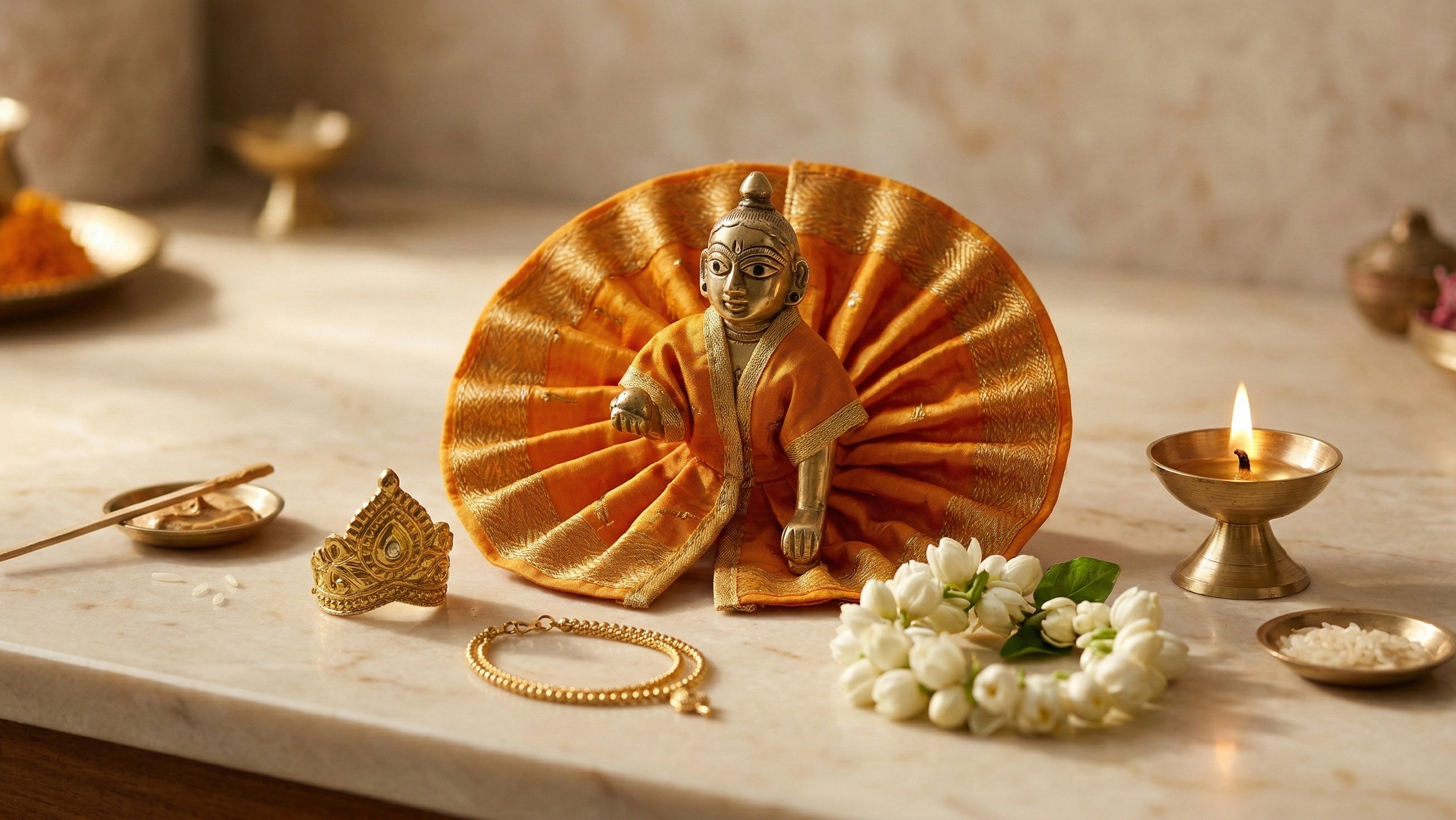
A consistent daily routine is the heart of Laddu Gopal seva. Once it becomes habit, the whole process takes only ten to fifteen minutes and becomes one of the most peaceful parts of your morning. Before you begin, gather your essentials on a small pooja thali: a soft dressing cloth, chandan (sandalwood paste), the day's poshak, mukut (crown), bansuri (flute) and a mala (garland). Then follow this sequence:
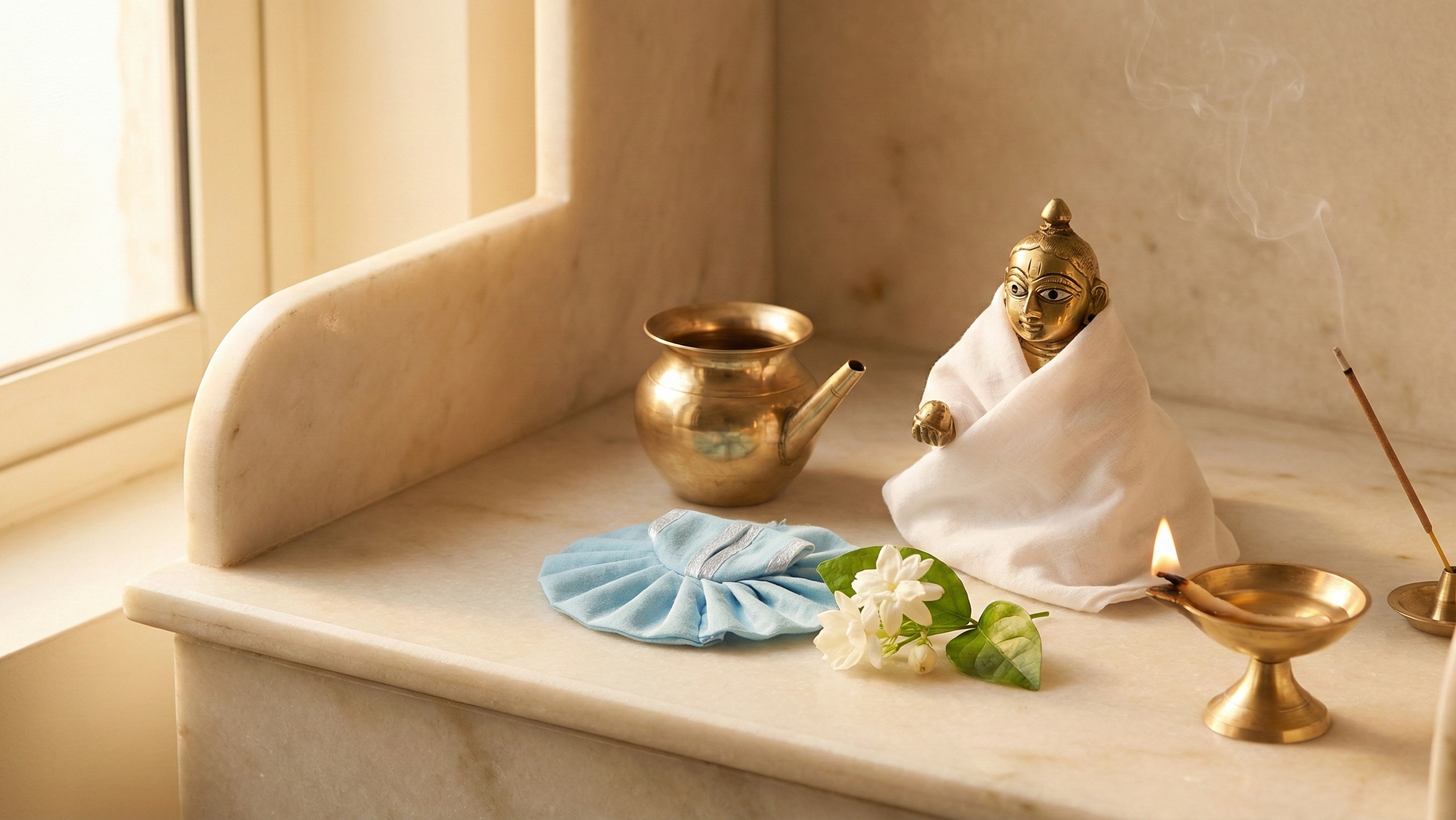
- Snan (bath): Gently wipe Thakurji with a soft, slightly damp cloth. On special days, some devotees do a symbolic panchamrit bath using milk, curd, honey, ghee and sugar water, followed by a clean water wipe.
- Pat dry: Use a fresh cotton cloth to absorb all moisture. Never leave the idol damp, as moisture can affect the idol's finish and stain poshak fabric over time.
- Chandan tilak: Apply a small dot of chandan on the forehead using your ring finger. You may also apply it lightly on the arms and chest.
- Poshak: Lay the poshak face-up, identify the front panel, and gently ease it over Thakurji's head and body. Adjust so the design is centred, then secure the ties at the back, snug but never tight.
- Mukut: Place the mukut on Kanha Ji's head so it sits straight and level. A tilted mukut is one of the most common beginner slip-ups and is easily fixed with a moment of care.
- Bansuri and accessories: Tuck the bansuri gently into the left hand if your idol is in the flute-playing posture. Add any additional accessories such as kangana (bracelets) and kundal (earrings) that feel right for the day.
- Mala: Finish with a mala of fresh or good-quality artificial flowers around the neck. Even a small loop of mogra or marigold makes the shrine feel alive.
Tip: Keep a dedicated shringar tray so every accessory has a home. A consistent setup makes the morning routine calm and unhurried.
Daily Shringar vs Festival Shringar
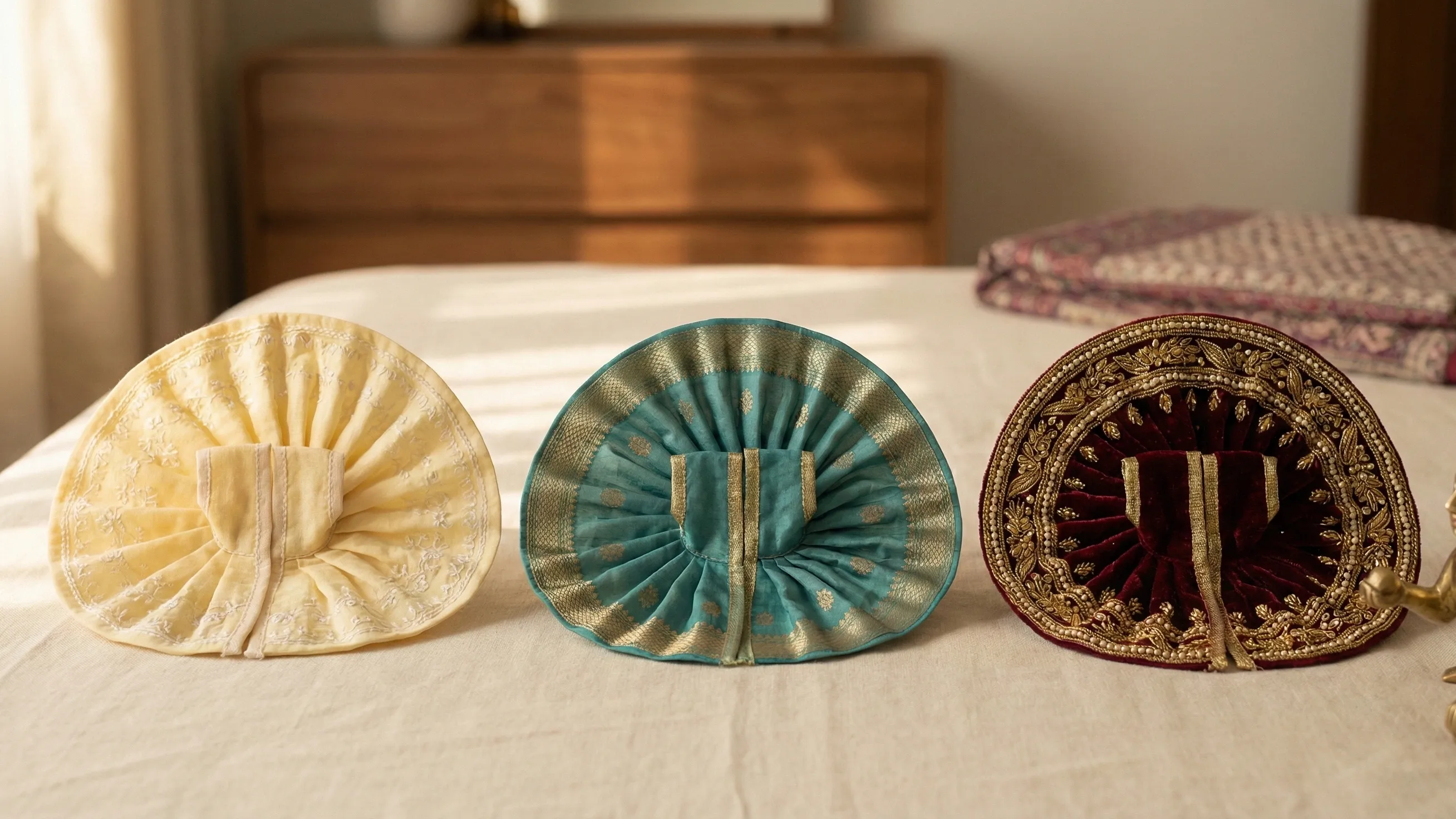
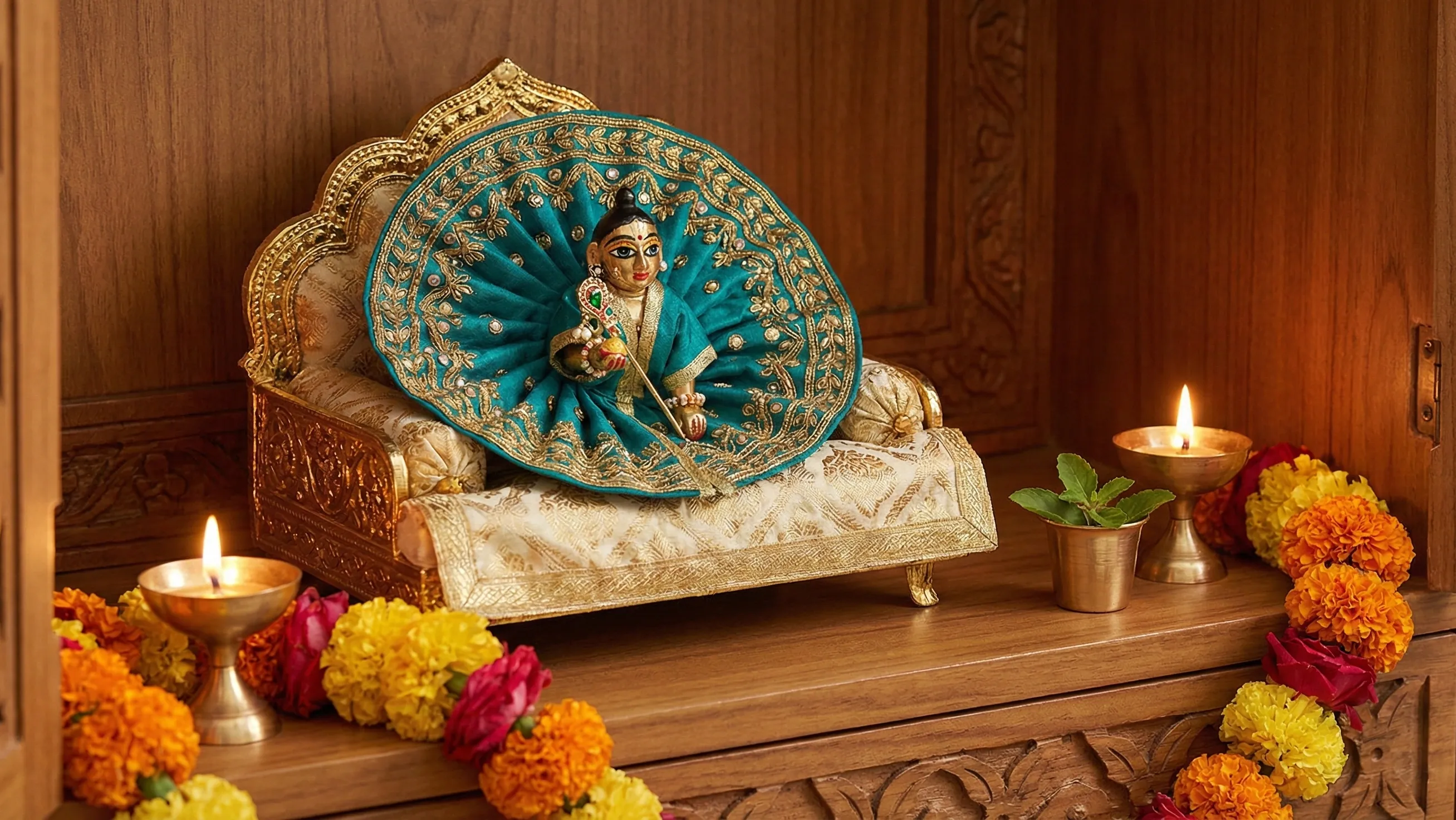
Daily shringar should be simple, clean and completed with calm focus. One poshak, the mukut, a bansuri, a mala. That is enough for an ordinary morning. Festival shringar is an entirely different expression of devotion. For occasions like Janmashtami, Holi, Radha Ashtami or Annakut, devotees traditionally add layers: a pagdi (decorative turban) over or in place of the regular mukut, a haar (longer necklace), kangana on both wrists, kundal and sometimes a miniature peacock feather tucked into the crown. The poshak itself changes too. Festival occasions call for richer fabrics like silk, velvet or heavy brocade with zari work, while daily poshak can be simpler cotton or light georgette. The key difference is intentionality: daily shringar is your quiet morning offering, and festival shringar is a celebration. Both carry equal weight in seva.
Tip: Photograph your favourite festival shringar arrangements so you can recreate them the following year. Over time this becomes a beautiful visual record of your devotion.
Proportionality: Matching Accessories to Idol Size
This is something many beginners overlook, and it makes a significant visual difference. A size 1 or 2 idol dressed with a large heavy mukut and multiple necklaces does not look adorned. It looks cluttered and unbalanced. As a general rule, smaller idols need delicate, lightweight accessories while larger idols have the visual presence to carry more. At Gopalji Fashion, our poshak are scaled with this in mind. Each size range is proportioned not just for the body of the idol but for the overall visual weight the shringar needs to feel harmonious:
- Size 0-3: One lightweight mukut, a thin bansuri, a single small mala. Keep it minimal and delicate, since simplicity reads as elegance at this scale.
- Size 4-6: A standard mukut, bansuri and mala work well daily. For festivals, add one or two accessories without going beyond that.
- Size 7 and above: This size has the presence to carry a fuller look. A larger ornate crown, a layered mala, multiple accessories and heavier fabric poshak all work beautifully.
Common Mistakes and How to Avoid Them
Every devotee makes a few of these in the beginning. Knowing about them in advance helps you protect both your idol and your poshak collection from day one.
- Using a poshak that is too tight: Forcing a snug poshak can scratch the idol's surface and strain the fabric seams. If in doubt between two sizes, always choose the larger one.
- Placing the mukut at an angle: Step back and view Thakurji from the front before finishing. A straight, level mukut makes the entire shringar look composed.
- Offering wet fresh flowers: Fresh flowers are beautiful, but make sure they are not dripping. Moisture stains on silk or brocade can be permanent and are difficult to remove.
- Over-accessorising small idols: A small Kanha Ji in a simple, well-fitted poshak with one clean mukut looks far more beautiful than the same idol buried under heavy jewellery.
- Skipping the routine on busy days: Even a two-minute shringar, a fresh cloth wipe, a chandan dot, the poshak straightened, matters. Consistency in seva has more value than occasional grand effort.
Putting Thakurji to Rest: The Evening Ritual
Just as the morning begins with shringar, a gentle evening ritual closes the day with the same love. After the night aarti (prayer with lamp), begin by removing the mala and setting it aside to dry before storage. Remove loose accessories such as bansuri, kangana and kundal, and return them to your shringar tray. Carefully lift the mukut and place it in a small box or soft pouch to protect it overnight. Finally, ease the poshak off gently, fold it loosely in a clean cotton cloth and set it flat. Never fold sharply at embroidered sections, as this can crack the thread work over time. Some devotees dress Thakurji in a simple shayan poshak (sleeping dress) for the night; others leave Kanha Ji lightly covered with a small cloth. Do whatever feels natural to your seva. Store the removed poshak in a breathable muslin or cotton pouch, never plastic, which traps moisture and invites mildew. This evening routine, done with the same care as the morning shringar, ensures your poshak stays fresh and beautiful through years of daily use.
Tags