Every devotee who has kept Laddu Gopal at home knows that dressing Thakurji is not a chore — it is a conversation. You open the wardrobe, look at the fabrics laid out before you, and somehow the right poshak makes itself known. But for devotees just beginning their seva, or those who have only ever worked with a handful of pieces, the sheer variety of poshak available today can feel bewildering. Silk, velvet, cotton, zari, zardozi, thematic designs, festival sets, everyday pieces — where does one begin? The answer is simpler than it looks. Poshak styles fall into three broad categories, each with a clear purpose, and once you understand those categories, building a meaningful collection becomes a natural, unhurried process.
Traditional and Ceremonial Poshak: Dressed for Divinity
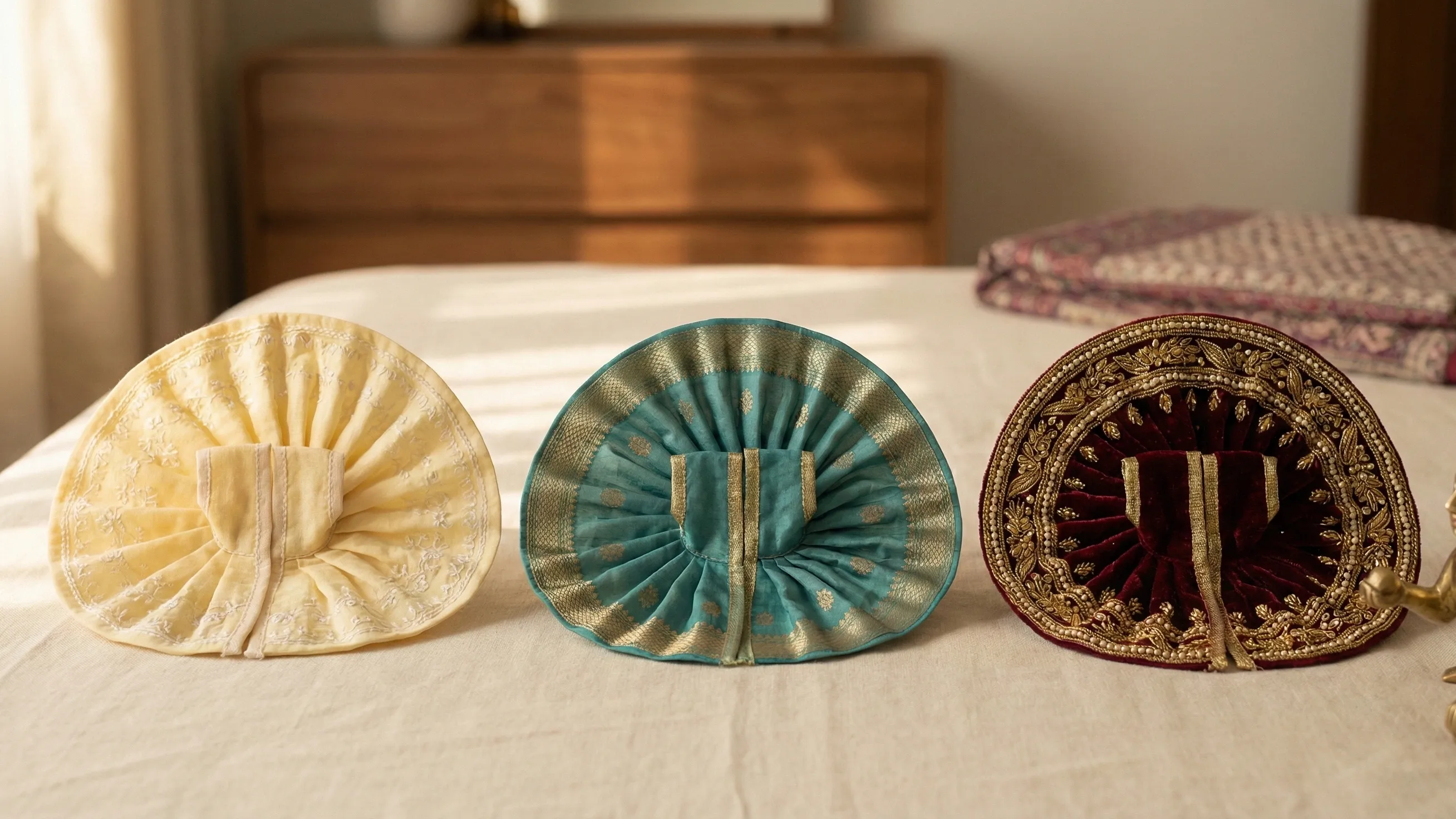
The traditional category is what most people picture when they imagine a Laddu Gopal poshak — richly woven fabrics, ornate borders, and embroidery that catches the light of a diya (lamp) like nothing else can. These are the poshak made for reverence. Silk is the foundational fabric here: Banarasi silk with its characteristic zari (woven metalwork) borders is among the most beloved choices for major festival occasions, while Katan silk in deep jewel tones works beautifully for weekly special puja days. Velvet, with its dense, light-absorbing pile, is the natural home for zardozi (needle embroidery with metal threads and stones) — and a maroon or emerald velvet poshak with zardozi detailing on a Thakurji in the glow of a ghee diya is genuinely breathtaking. Brocade, which has a structured, almost sculptural quality, is reserved for the grandest ceremonial occasions where you want Kanha Ji to look like the king that he truly is.
- Banarasi silk with zari borders — the gold standard for Janmashtami, Annakut and Diwali
- Katan silk in jewel tones — ideal for weekly vishesh puja (special worship) days and Ekadashi
- Velvet with zardozi embroidery — richest fabric for winter festivals; maroon, navy and emerald show best
- Brocade — heavy, structured and ceremonial; suited to Govardhan Puja and large annual havans
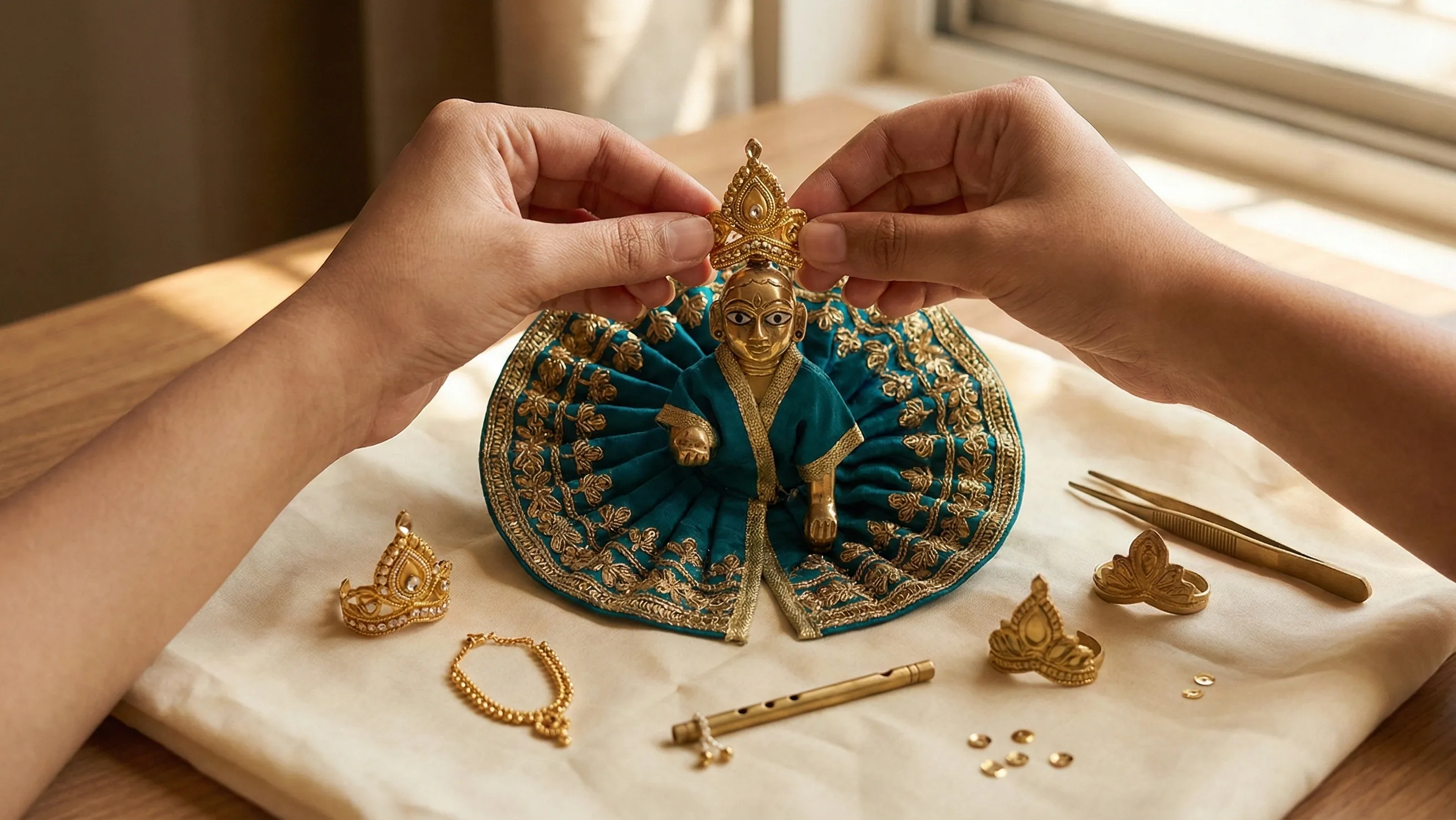
- Gold and silver lamé accents — often used on collars, borders or mukut (crown) trims for added opulence
Tip: When choosing a ceremonial poshak, match the heaviness of the fabric to the occasion. Reserve the most embellished pieces for the two or three festivals that matter most to your family — a truly grand poshak worn rarely is far more impactful than one worn every week.
Contemporary and Thematic Poshak: Telling a Story
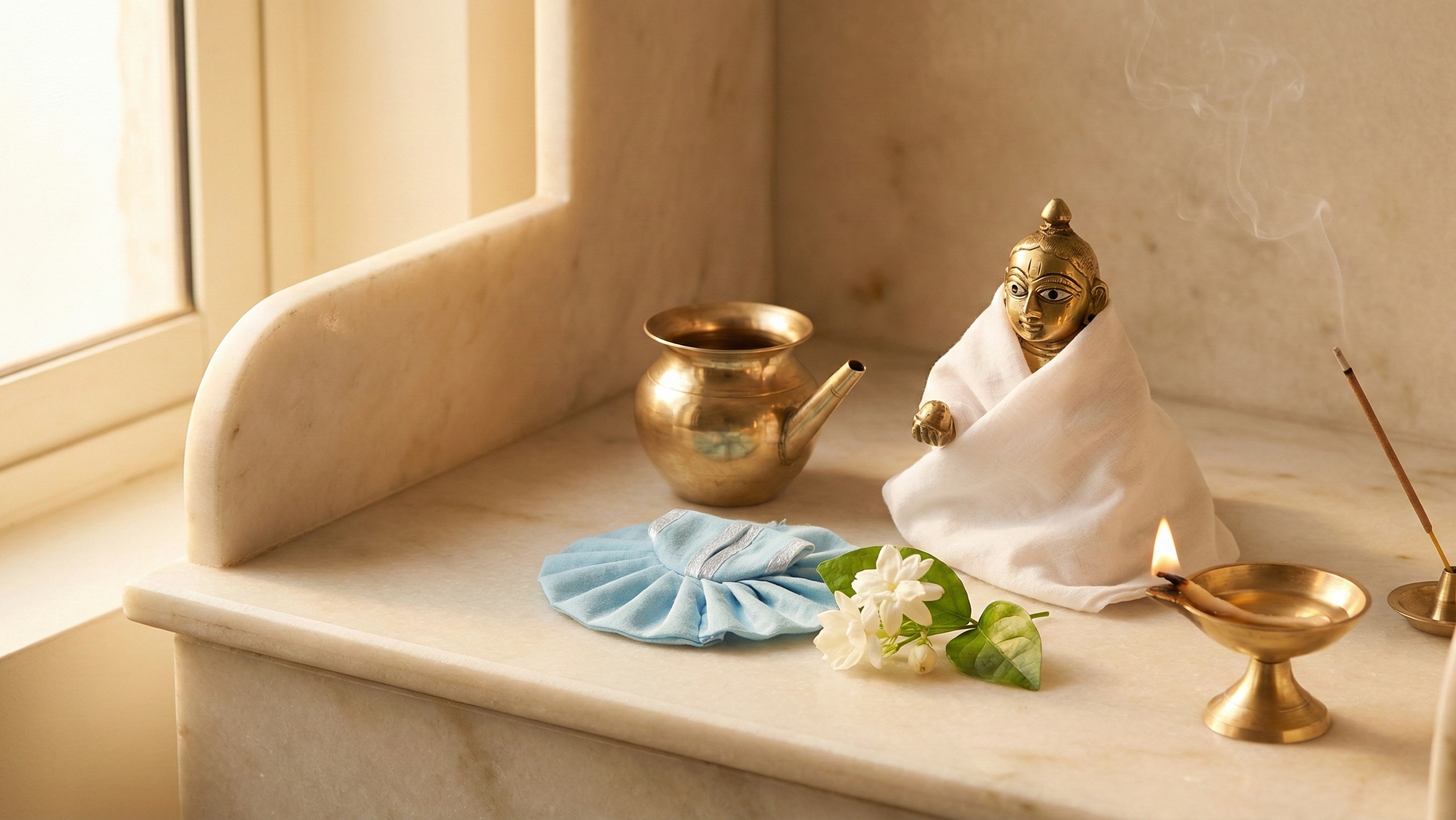
The contemporary category has grown remarkably in the last few years, and for good reason. These poshak draw on the stories and imagery of Lord Krishna's life in Vrindavan — and when done well, they bring Kanha Ji's personality to life in a way that purely decorative poshak sometimes cannot. The most beloved thematic style is the Makhan Chor (butter thief) set: a small matki (earthen pot) accessory, a morpankh mukut (peacock feather crown), and a poshak in butter-yellow or soft blue with playful detailing that captures the mischievous, joyful energy of Vrindavan. Peacock-inspired designs — using iridescent teal, deep green and blue colour blocking — are another perennial favourite, as is the Vrindavan pastoral theme with its soft, natural tones of cream, turmeric yellow and forest green. These poshak are especially popular with devotees who have children at home, because the stories they represent are accessible and joyful for young minds.
- Makhan Chor theme — butter yellow or soft blue, paired with matki and morpankh mukut accessories
- Morpankh (peacock) design — teal and iridescent blue-green colour blocking; works beautifully in silk and chanderi
- Vrindavan pastoral theme — cream, turmeric and forest green; soft, earthy tones with minimal embroidery
- Radha-Krishna couple set — coordinated fabrics and colours for both deities; pink and gold for Radha Ji, blue and gold for Kanha Ji
Everyday Poshak: The Soul of Daily Seva
It is easy to be drawn to the grandest, most elaborate poshak when building a collection — and those festival pieces absolutely have their place. But the poshak your Laddu Gopal wears on an ordinary Tuesday morning, during the quiet daily aarti (prayer offering) before you leave for the day, is in many ways the most important one of all. Everyday poshak are made from softer, lighter fabrics: unbleached or naturally dyed cotton, chanderi (a fine, slightly sheer woven fabric from Madhya Pradesh), and georgette. These materials are gentle on the idol, easy to wash, and comfortable in the warmest months. A well-chosen cotton poshak in a clean, simple design — perhaps a small floral border or a single contrast colour panel — is never plain. It is deliberate. It says that Thakurji's daily seva is no less worthy of care than the grand festival days. Keep two or three good cotton or chanderi pieces for daily rotation and you will find the act of daily shringar becomes effortless and genuinely nourishing.
- Cotton — the most practical everyday fabric; easy to hand wash, quick to dry, gentle on small idols
- Chanderi — fine and slightly sheer; beautiful in warm months, pairs well with a simple zari or block-print border
- Georgette — soft and lightly draped; holds colour well and works across both spring and monsoon seasons
- Natural dye cotton — sattvic (spiritually pure), eco-conscious, and available in earthy indigo, turmeric yellow and madder rose
Tip: Rotate your daily poshak on a fixed schedule — for example, one piece per two days. This prevents wear on any single poshak, extends their life considerably, and also makes each change of dress feel intentional rather than routine.
Setting Up the Altar: Singhasan, Fabric and Light
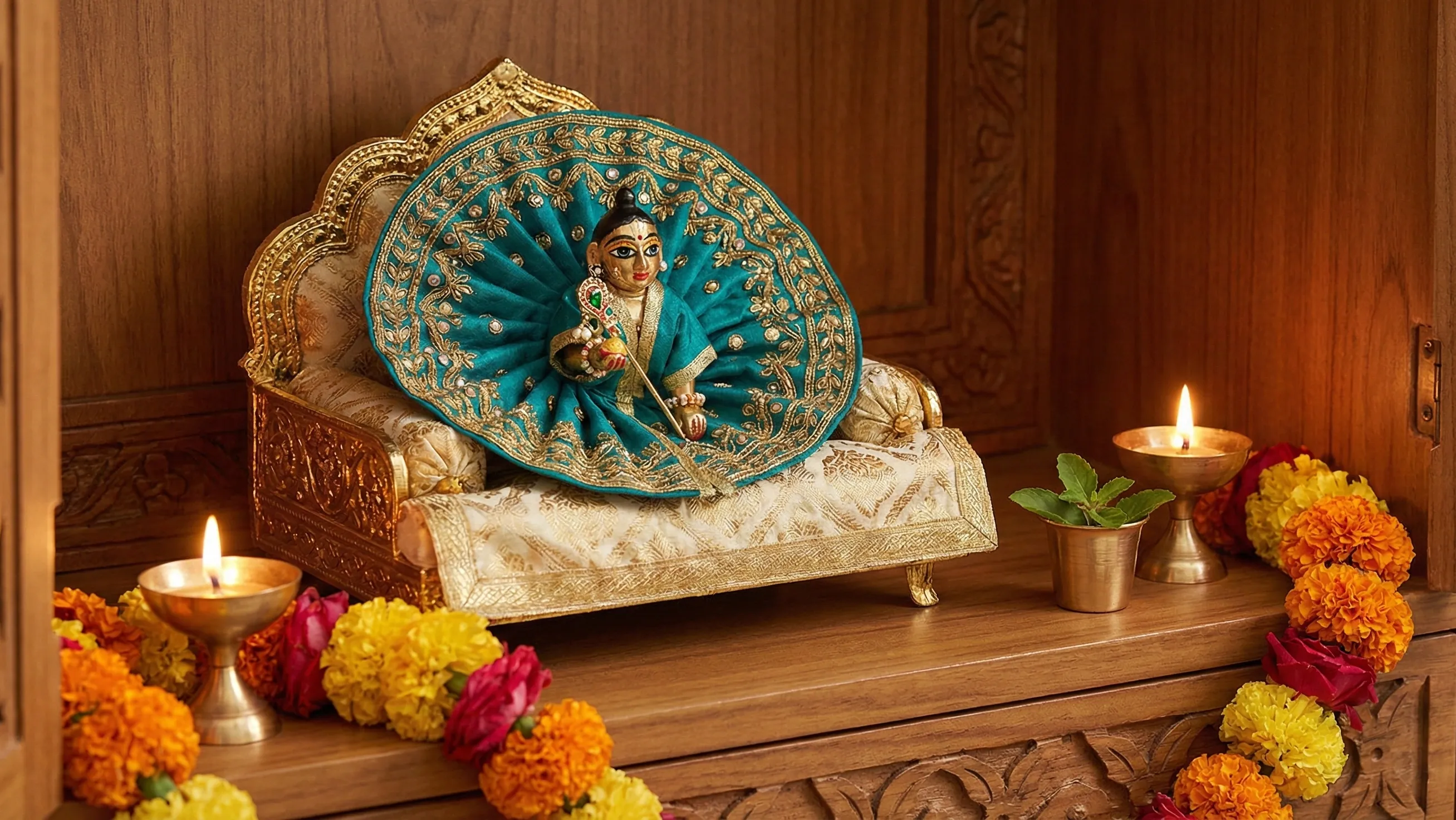
Even the most beautiful poshak will not show to its full potential if the altar (mandir space) around it is not thoughtfully arranged. The singhasan (throne) is the foundation of everything. Whether you use an ornately carved wooden throne, a brass pedestal, or a simple velvet-upholstered platform, the singhasan should be proportionate to your Laddu Gopal's size — not so tall that Kanha Ji's eye level falls below a comfortable line of sight, and not so low that the idol feels lost in a sea of accessories. The base fabric of the altar deserves the same attention as the poshak itself. A small piece of coordinated fabric — a scrap of matching silk, a folded piece of cotton in a complementary colour — laid under the singhasan ties the visual composition together and grounds the entire display. Flowers are non-negotiable for devotees who take shringar seriously: fresh flowers placed daily, or high-quality artificial ones that are changed seasonally, give the altar a living quality that no decoration can replicate. Finally, lighting: a soft ghee diya immediately in front of Thakurji, placed low enough not to cast harsh upward shadows, transforms even an ordinary altar into something sacred.
- Singhasan: match the scale to the idol — the throne should frame, not overwhelm
- Base fabric: coordinate with the poshak; even a simple square of matching silk creates visual cohesion
- Fresh flowers: placed daily if possible; tulsi (holy basil) and marigold are the most traditional choices
- Lighting: a ghee diya positioned at idol level produces the warmest, most flattering light for shringar
- Accessories: keep the display uncluttered — one mukut, one mala (garland), a bansuri (flute) is all that is needed for a clean, elegant look
Building Your Collection Gradually
The single most common mistake new devotees make when starting their poshak journey is trying to acquire everything at once. A wardrobe that grows slowly and intentionally is far more meaningful — and far more useful — than one assembled in a rush. Begin with the everyday: two or three cotton or chanderi poshak for daily seva. These will immediately make your daily shringar feel complete and considered. From there, add a single good festival piece — silk or velvet suited to the most important festival in your household calendar. Over the following year, you will naturally notice which occasions feel under-served, which seasons call for something different, and which thematic designs catch your heart. Let those observations guide your next purchase. A thoughtful collection of eight to ten poshak covering daily rotation, three or four major festivals and one or two special-occasion pieces will serve virtually any household's seva through every season of the year. At Gopalji Fashion, each poshak is crafted with a specific place in this kind of collection in mind — and if you are ever unsure where to begin or what to add next, reaching out via WhatsApp is the easiest way to get a recommendation tailored to your specific Thakurji and your family's puja rhythm.
Tip: Before making any new purchase, lay your existing poshak out and look at what you have. Gaps will become obvious — you may find you have three festival velvet pieces but nothing suitable for daily summer wear. Buy to fill gaps, not to accumulate.
Tags