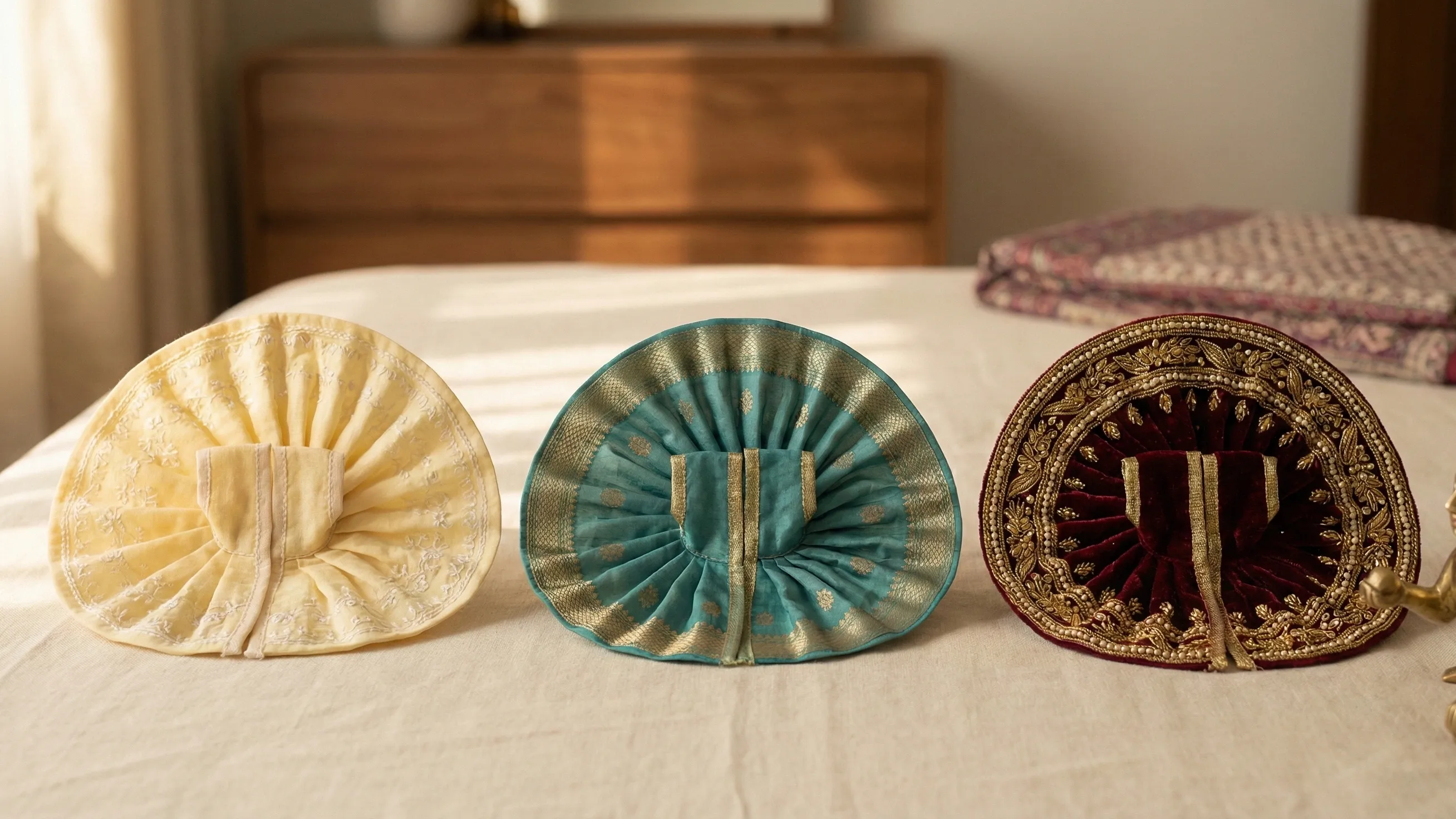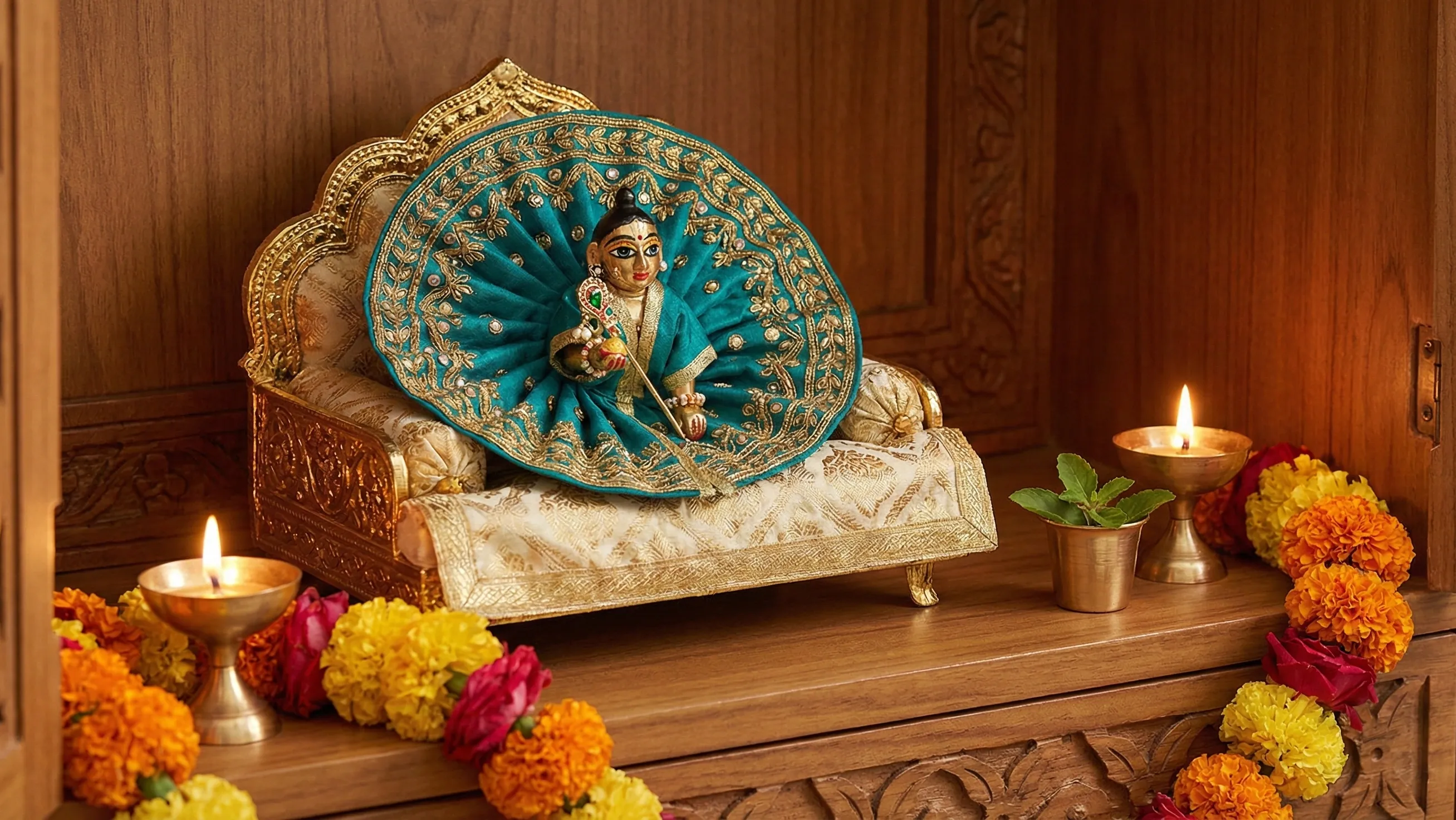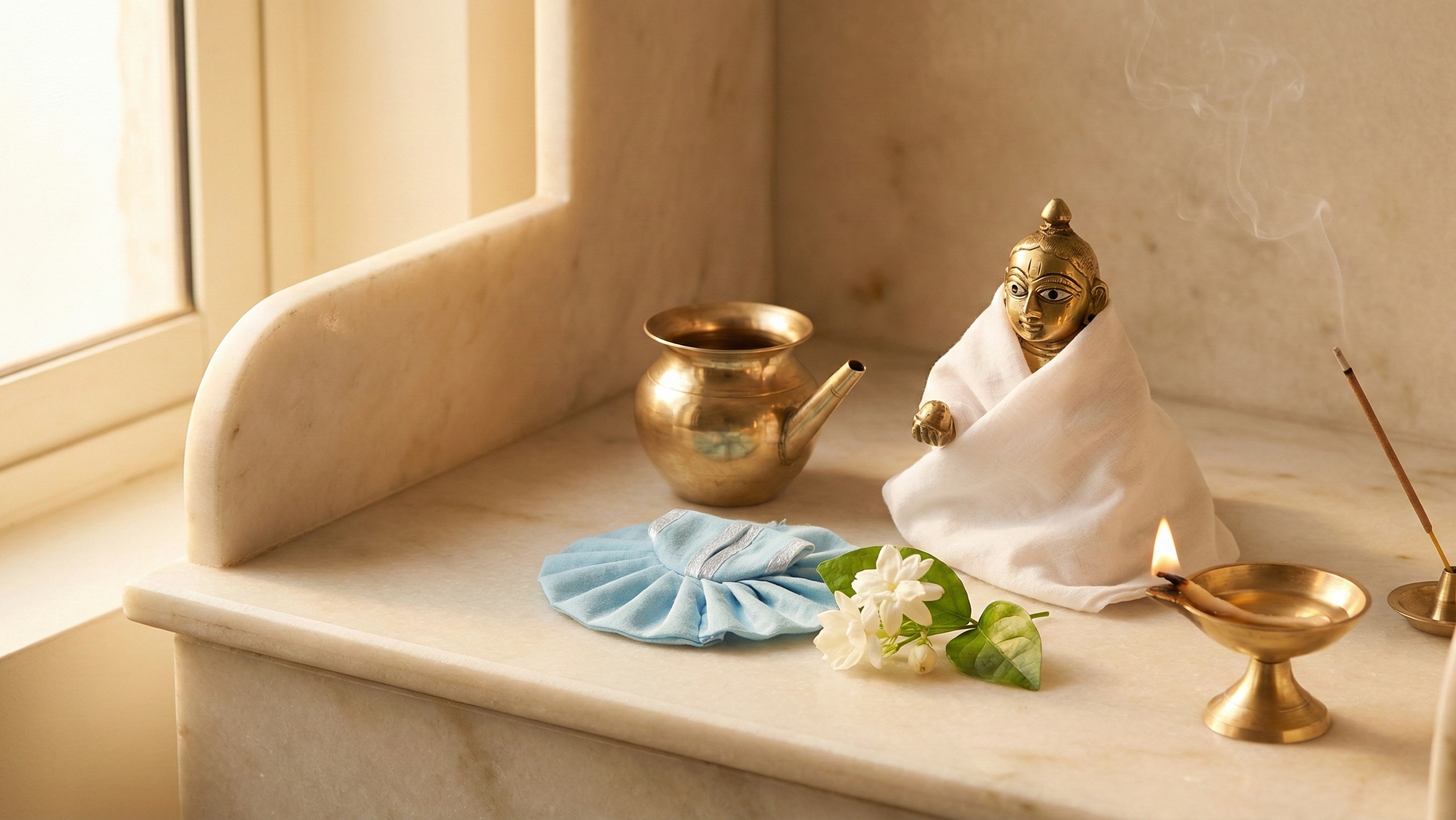
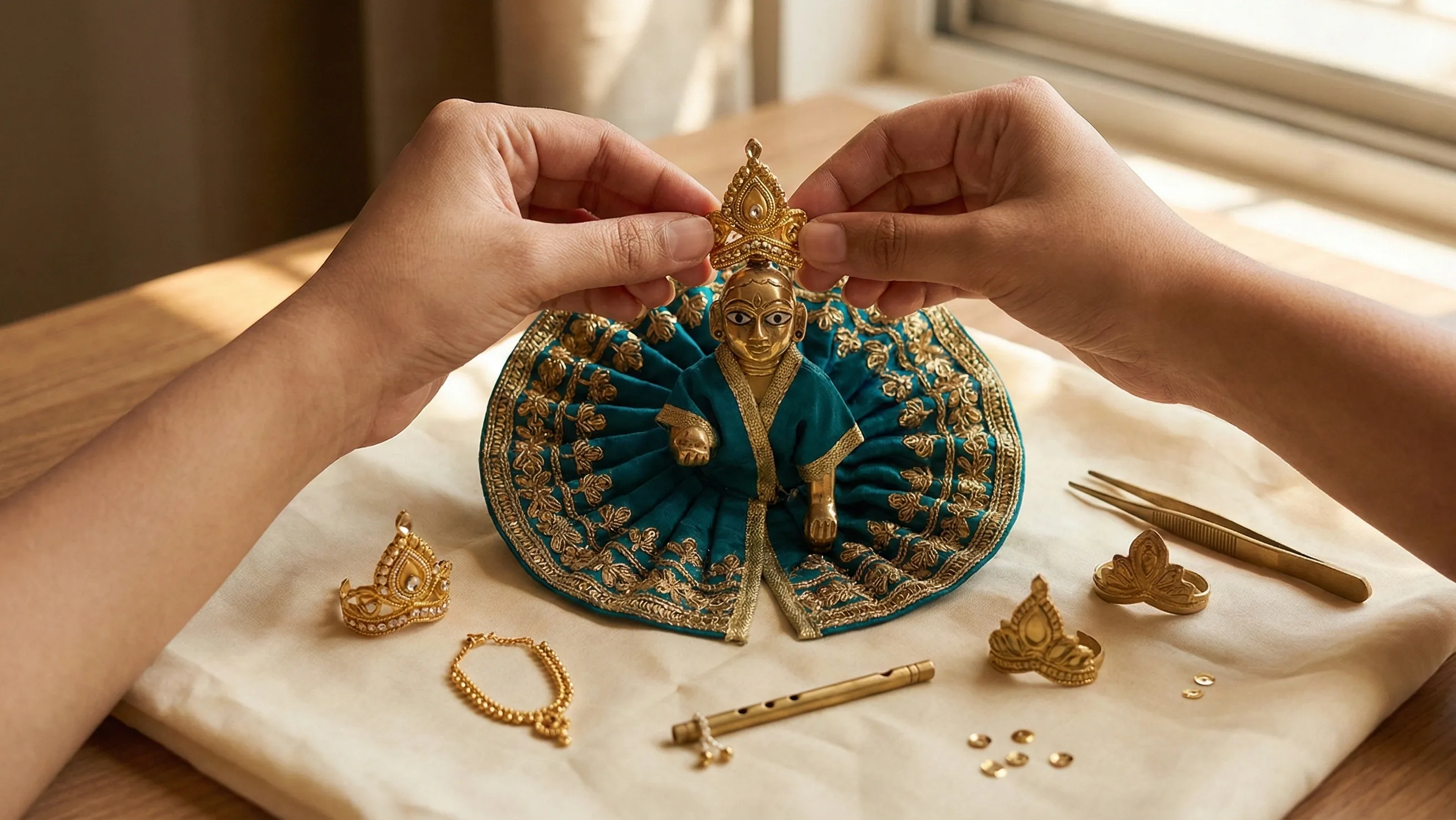
There is a quiet shift that happens in every devotee's relationship with seva (daily worship service). In the beginning, dressing your Laddu Gopal is an act of careful learning — you study how to fold the poshak, how to secure the ties, how to place the mukut (crown) without letting it tilt. Then, gradually, the mechanics become second nature. Your hands remember. And that is when something deeper opens up: the desire not just to dress Kanha Ji, but to truly style Him. Styling is dressing with intention. It is the moment you start noticing how a particular mukut lifts the whole look of a poshak, or how the colour of your Thakurji's singhasan (throne) either harmonises with His outfit or works against it. This guide is for devotees who have arrived at that stage — and for anyone who simply wants to bring more thought, more love and more beauty to the way their Laddu Gopal is presented each day.
The Art of Mukut Pairing
The mukut is the single most visible accessory in any shringar (decoration), and it does far more than simply crown Kanha Ji's head — it sets the tone for the entire look. The rule that experienced devotees follow is elegantly simple: match the weight of the mukut to the weight of the poshak. A heavily embroidered velvet poshak with zari (woven metalwork) borders calls for a structured, ornate mukut — something in polished metal with stone setting or fine filigree work. The formality of the crown echoes the formality of the outfit and gives the whole shringar a composed, regal quality. Conversely, a light pastel poshak in cotton or chanderi silk looks most beautiful when paired with a natural floral mukut — a small circlet of fresh mogra, marigold or even dried flowers gives it a sweetness and softness that a heavy metal crown would completely overpower. Many devotees keep both types in rotation: one grand mukut for festival and special-occasion poshak, and one or two simpler floral options for everyday and seasonal wear.
- Heavily embroidered poshak (velvet, brocade, zardozi): pair with a structured metal mukut featuring stone work or fine filigree — the formality of the crown should match the formality of the fabric
- Light pastel or everyday poshak (chanderi, cotton, georgette): pair with a natural floral mukut or a simple bead-and-wire crown — heaviness in the crown competes with the softness of the outfit
- Festival silk poshak in bold jewel tones: pair with a mid-weight mukut in enamelled metal or gold-plated brass — enough presence to hold its own against the rich colour
- Seasonal theme poshak (spring florals, monsoon greens): floral and leaf mukuts in silk or fabric flowers echo the theme without clashing
Tip: If you only own one metal mukut, look for a style in plain polished gold or antique brass finish — these neutrals pair well with nearly every poshak colour rather than competing with specific hues.
Coordinating Jewellery with Poshak Tone
Jewellery for Laddu Gopal — the small haar (necklace), kangana (wrist bangles), kundal (earrings) and any waist piece — follows the same colour temperature logic used in human jewellery styling. Poshak in warm tones respond best to warm metal jewellery. A saffron, deep red, rust or forest green poshak will look its richest when paired with gold-toned accessories and, where stones are involved, warm naturals like pearls, amber or coral. The warmth complements warmth, creating a unified look rather than a fragmented one. Cool-toned poshak — anything in the blue, lavender, grey or icy pink family — sing when paired with silver or silver-toned jewellery, with crystals, clear stones or cool white pearls providing the accent. This is not a rigid rule, and experienced devotees sometimes break it deliberately for contrast, but as a starting principle it produces beautiful results consistently.
- Warm poshak tones (saffron, red, rust, olive green, ochre): gold-toned jewellery, pearl accents, amber or coral stones
- Cool poshak tones (blue, lavender, grey, icy pink, white): silver-toned jewellery, crystal accents, cool white pearl
- Neutral poshak (ivory, cream, sand, off-white): either gold or silver works — let the mukut metal tone decide
- High-contrast or multicolour poshak: keep jewellery minimal and in one metal family to avoid visual overload
Tip: A small haar worn close to the neck photographs better on smaller idol sizes (Size 0 to 3) than a longer layered style — the proportions stay balanced and the poshak remains visible rather than being covered by necklace layers.
The Bansuri and Peacock Feather as Visual Anchors
Of all the accessories associated with Kanha Ji, the bansuri (flute) and the morpankh (peacock feather) are the two most recognisable — and the two most overlooked in styling decisions. Most devotees choose them once and never think about them again. But these two accessories function as the visual anchor of the entire shringar, drawing the eye and completing the narrative of the look. The bansuri should be chosen in proportion to the idol's size: a bansuri that is too long looks awkward and can unbalance a smaller poshak, while one that is too short disappears. Natural bamboo bansuri in warm brown tones work with almost every poshak palette. The morpankh tucked into the mukut introduces a soft, organic element that lightens even the heaviest, most formal poshak. A single peacock feather — whether real or silk — placed correctly in the crown transforms the whole mood of the shringar from formal to joyful, which is, at the end of the day, exactly the quality most associated with Krishna.
Matching the Singhasan to the Poshak
The singhasan (throne or seating platform) is the one element most devotees treat as a permanent fixture — chosen once and never reconsidered. But the singhasan is part of Thakurji's full look, just as furniture is part of a room's aesthetic. Paying attention to how the throne interacts with the poshak makes an enormous difference to how the overall mandir (home shrine) presents itself. The simplest principle is fabric echo: a rich velvet poshak looks most composed when Kanha Ji is seated on a velvet-covered or deeply padded singhasan, because the texture family feels unified. A natural wood singhasan — whether polished rosewood, carved sandalwood or raw-finish timber — pairs naturally with cotton, chanderi and other organic-fabric poshak, giving the whole arrangement an earthy, traditional warmth. Where singhasan and poshak fabric diverge sharply in formality, the result can look slightly dissonant, even if each element is individually beautiful.
- Velvet poshak: velvet-padded singhasan, or a throne with rich embroidered cushion — keep the weight and texture consistent
- Cotton or chanderi poshak: natural wood singhasan, cane seat, or a simple woven mat — organic materials complement organic fabrics
- Heavy brocade or silk poshak: polished or carved wooden singhasan with brass fittings — the structure of brocade calls for a throne with clear, strong form
- Seasonal or floral poshak: a singhasan adorned with fresh petals on the seat echoes the soft, natural mood of the outfit
Multicolour Poshak, Contrast Borders and When to Reach for Custom
Multicolour poshak and poshak with bold contrast borders occupy a special place in any devotee's collection — they are the most versatile pieces you can own. A poshak worked in two or three coordinating colours can be styled forward or backward: dress Thakurji with a mukut that picks up the dominant colour of the poshak on most days, and then switch to a mukut in the accent or border colour for a completely fresh look. The same garment reads entirely differently depending on which element the accessories choose to echo. This is the kind of styling flexibility that is genuinely worth thinking about before you purchase. At Gopalji Fashion, several of our poshak designs are specifically conceived with this versatility in mind — a saffron and ivory piece with a green border, for example, can be styled in three distinct directions depending on mukut, jewellery and singhasan choices. And for devotees with a very specific vision — a particular colour story, a festival theme or an accessory set they already love and want to build a poshak around — our custom order service is designed exactly for that purpose. Share your vision, your measurements, and any references that inspire you, and we will bring it together into a poshak made precisely for your Kanha Ji.
Tip: Before placing a custom order, spend a few days photographing your existing shringar arrangements. Patterns emerge — favourite colour combinations, accessory groupings that keep reappearing — and those patterns are the most reliable guide to what you actually love rather than what you think you should want.
Tags