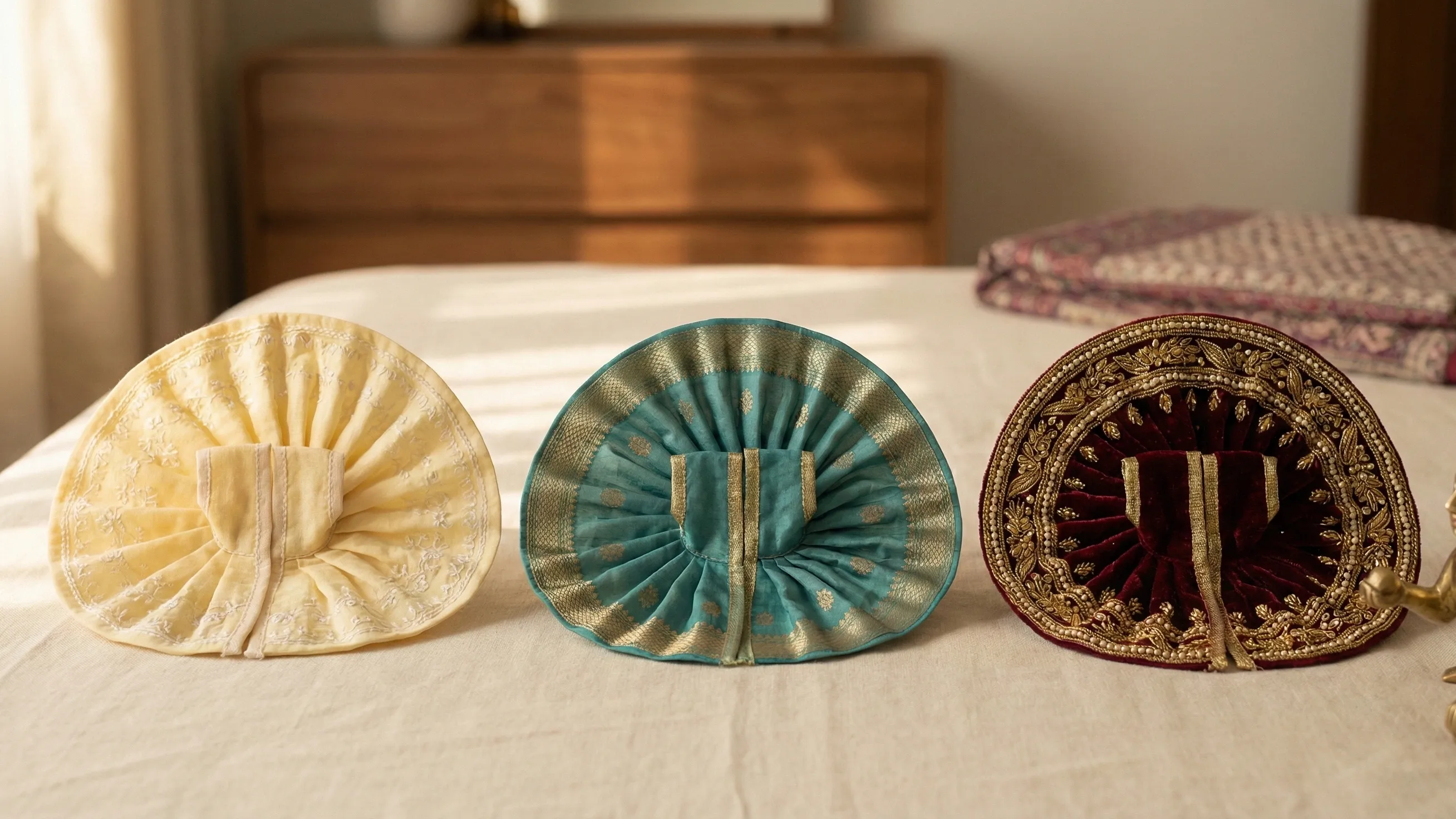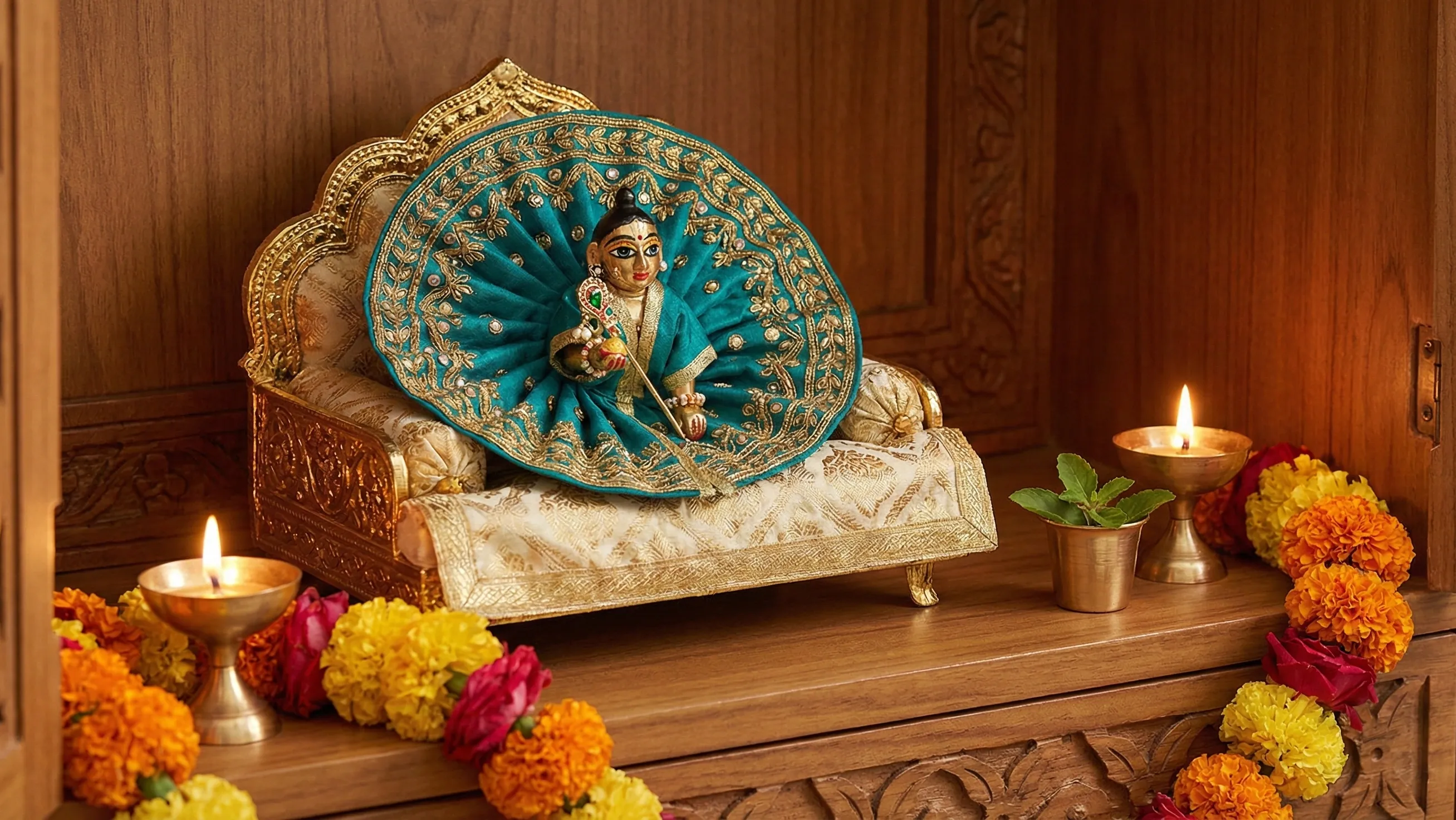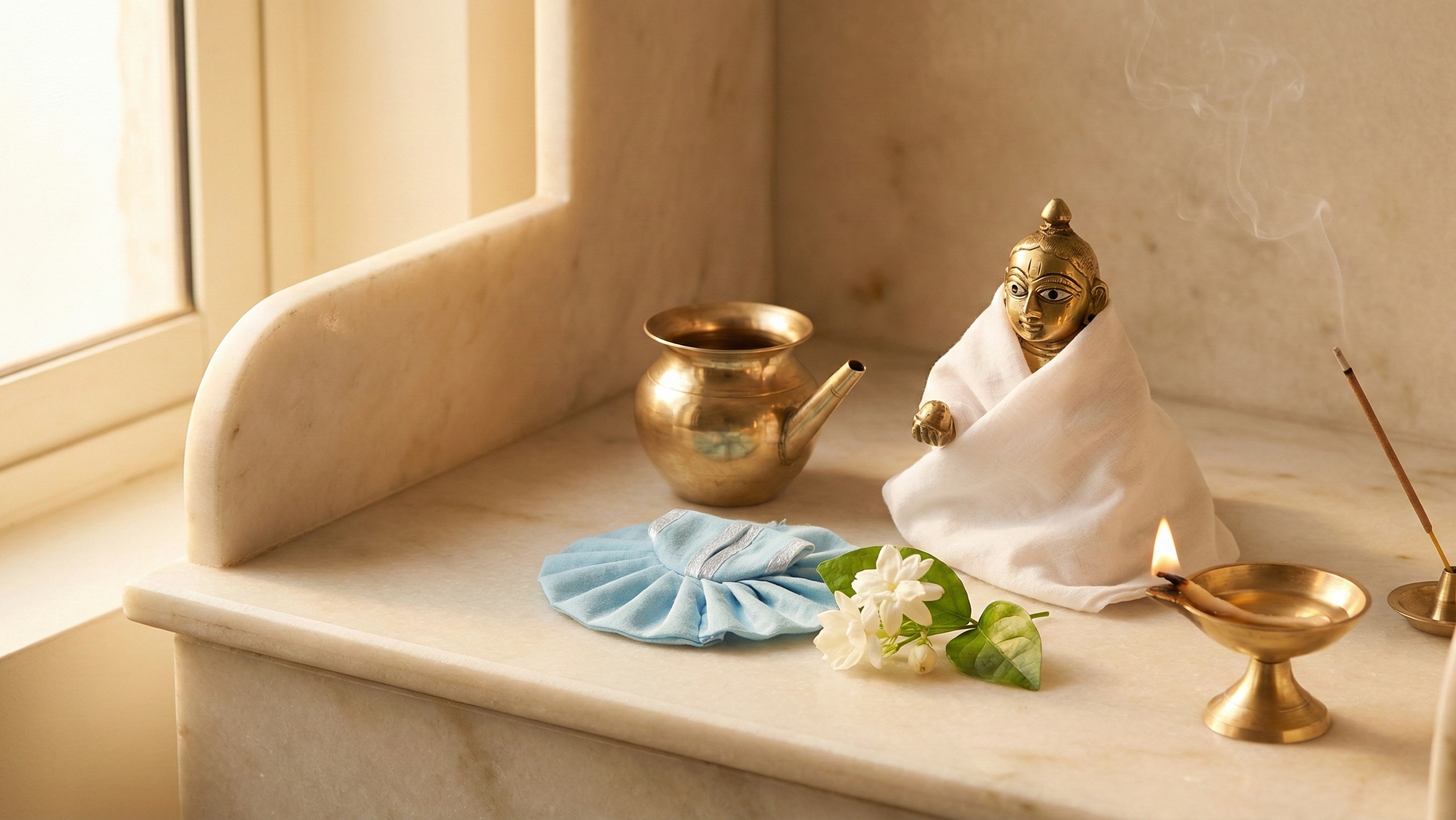
Getting the perfect poshak for your Laddu Gopal starts with one thing: an accurate measurement. Many devotees, especially those beginning their Kanha Ji seva, assume that the size number printed on a poshak label is enough to go by. The truth is, it rarely is. Unlike ready-made human clothing where sizes follow industry-wide standards, Laddu Gopal poshak sizing varies significantly from one manufacturer to another. A Size 3 from one craftsperson may fit your Thakurji beautifully, while a Size 3 from another workshop may be far too loose or uncomfortably snug. The only way to guarantee a perfect fit, every single time, is to measure your specific idol before you order.
Why Sizing Is Not One-Size-Fits-All
The Laddu Gopal idol market in India draws from hundreds of regional artisan traditions: Mathura marble, Vrindavan brass, Jaipur terracotta, Odisha panchaloha. Each tradition produces idols with subtly different proportions. Two idols both labelled "Size 4" might share the same height but differ in torso width, arm span or the curve of the belly. This is not a defect. It is the beauty of handcrafted devotional art. But it does mean that every poshak maker, including us at Gopalji Fashion, sizes their pieces around a typical proportion range, not a universal standard. Understanding this is the first step to never ordering the wrong size again.
How to Take the Three Key Measurements
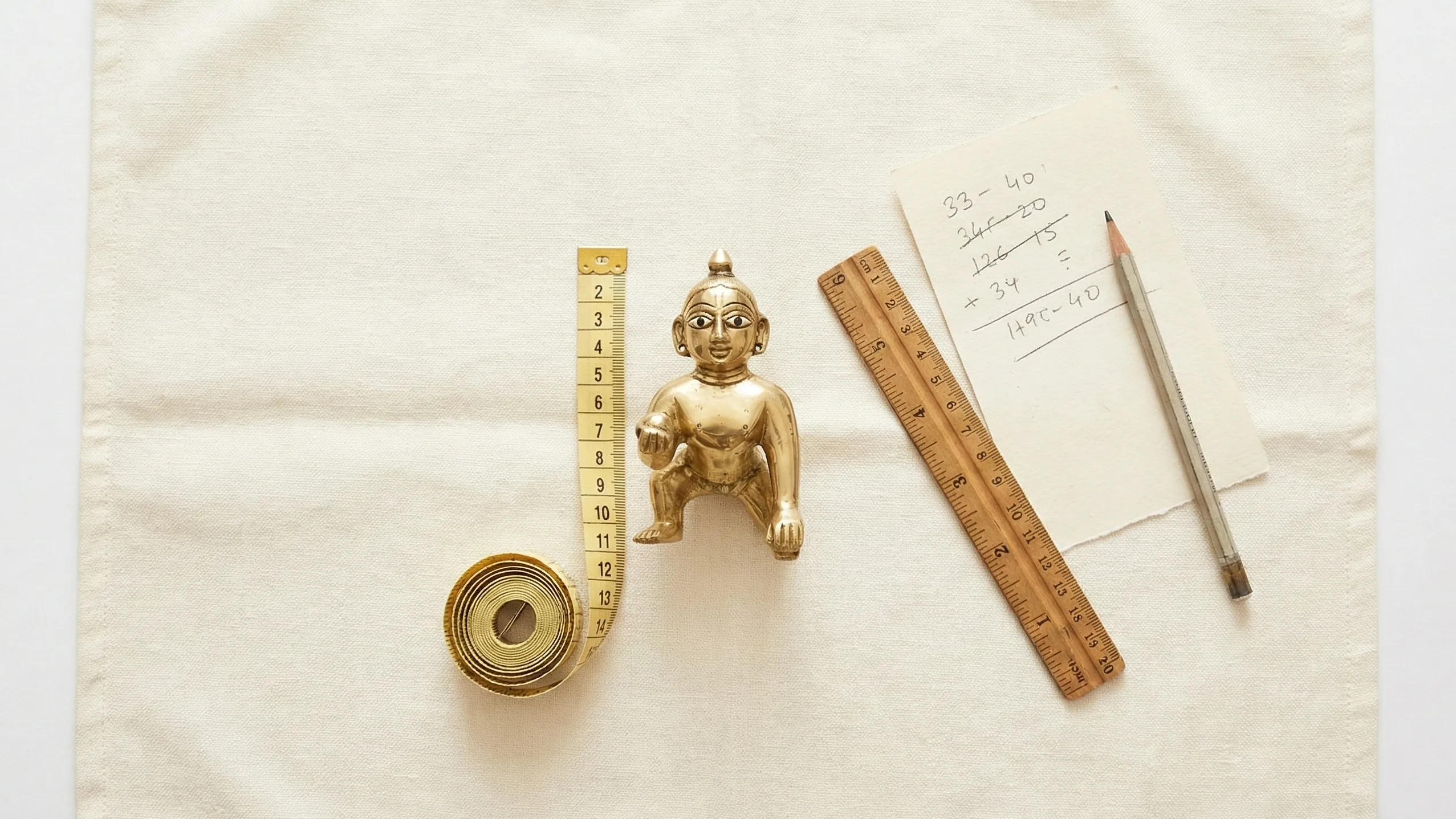
You do not need any special tools for this. A soft measuring tape works best, but a piece of thread and a ruler are equally effective. Measure your Laddu Gopal in good light with the idol placed upright on a flat surface. Take these three measurements and note them down before you order:
- Height (Lambai): From the base of the feet to the very top of the head, not including the mukut (crown). This is your primary size reference.
- Chest/Torso width (Seena): Measure around the widest point of the torso, which is usually at the belly. Wrap the tape or thread snugly but not tightly, since you want the natural circumference.
- Arm span (Bahu phailaav): For idols with outstretched arms, measure from the tip of one hand to the tip of the other. This determines poshak sleeve width and ensures the arms can be dressed comfortably.
Tip: If you are measuring with thread, mark both ends with a pen and then lay the thread flat against a ruler. Always measure twice before noting down a final number.
Standard Size Reference Chart
Once you have your measurements, you can map them to the standard size numbering system used across most Indian poshak makers. Keep in mind these are approximate height ranges, and torso proportion matters too, so always cross-check your chest measurement before finalising:
- Size 0: approximately 1.5 to 2 inches tall (very small, often for travelling idols or gift sets)
- Size 1: approximately 2 to 2.5 inches tall
- Size 2: approximately 2.5 to 3 inches tall
- Size 3: approximately 3 to 4 inches tall (one of the most common household sizes)
- Size 4: approximately 4 to 5 inches tall
- Size 5: approximately 5 to 6 inches tall
- Size 6 and above: 6 inches and taller; large sinhasan idols often fall here
Common Measurement Mistakes to Avoid
Even with a measuring tape in hand, a few common errors can lead to the wrong size ending up at your door. Being aware of these will save you the disappointment of a misfit poshak:
- Measuring with the mukut on: Always remove the crown before measuring height. Mukuts vary enormously in size and will give you an inflated reading.
- Pulling the tape too tight: Measuring the torso too snugly does not leave any room for the fabric to sit naturally. The poshak will feel tight and be difficult to secure.
- Measuring a printed image or photo: Photos distort proportions depending on the angle. Always measure the physical idol.
- Relying on the previous order: If your last poshak fit well, note the actual measurements, not just the size number, because the same size from a different maker may run differently.
- Forgetting to re-measure after repair: Idols sometimes undergo restoration that can slightly change proportions. Re-measure after any significant repair work.
Tip: When your measurement falls exactly between two sizes, always go one size up. A slightly roomier poshak is far easier to dress neatly than one that stretches across the belly.
When to Consider a Custom Poshak
Standard sizes cover the vast majority of Laddu Gopal idols found in Indian homes, but there are times when a custom poshak is the right answer. If your Thakurji is a vintage murti passed down through the family, an unusually proportioned idol with very broad shoulders or a notably round belly, or if you have a large sinhasan idol above Size 6, standard sizing will rarely serve you well. At Gopalji Fashion, our custom order service is designed exactly for these situations. Share the three measurements along with a photograph of your idol next to a ruler, and our artisans will create a poshak tailored precisely to your Kanha Ji's form. Custom orders typically take 7 to 10 working days and are available across all our fabric and design collections. The result is a poshak that drapes perfectly, looks beautiful in photographs, and makes your daily shringar a truly joyful experience.
Tags